
Ever lost a tooth and thought, “Eh, it’s not a big deal,” especially if it’s not visible when you smile? You’re definitely not alone. Tons of folks in Melbourne wait to fix it—hoping life will calm down or that the gap won’t bother them. But here’s the thing: your body doesn’t wait. The moment a tooth’s gone, your jawbone starts to change, nearby teeth begin to drift, and how you chew shifts. Understanding these changes can help you decide if you should just keep an eye on things, go for a temporary solution, or think about something more permanent, like a single tooth implant in Melbourne.
Here’s a rundown of the timeline for bone loss, bite issues, and other sneaky side effects. Plus, some practical tips to prevent long-term damage.
Why Ignoring That Gap Isn’t Just a Cosmetic Thing
A missing tooth—even if it’s hidden—can kick off a whole mess of problems:
- The chewing surface disappears on that side.
- The other side begins working overtime, and wears out quicker.
- Your jaw joints (yep, the TMJ) start acting up.
- Food accumulates, letting bacteria throw a party.
- The bone beneath the gap shrinks, complicating future fixes.
It’s not just about appearances. A solid mouth structure keeps everything aligned—teeth, gums, jawbone.
What Happens Early On: The First Weeks to Months
At first, you probably won’t notice much—yet small biological changes are underway.
Bone Resorption Kicks In Quickly
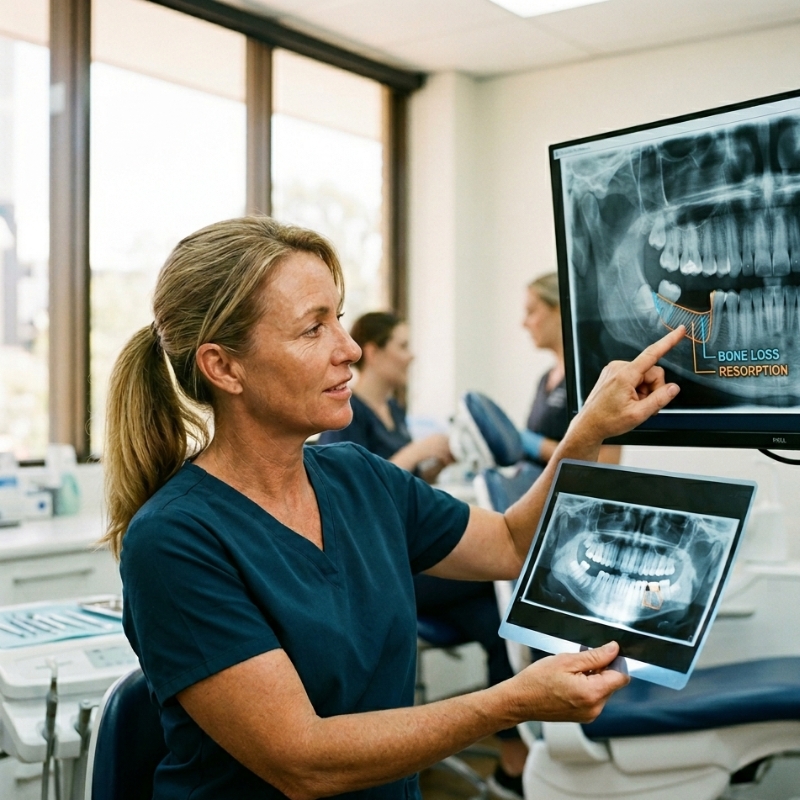
Usually, the tooth root sends a message to the bone, “Stay strong.” Without that nod, cells called osteoclasts swoop in and start breaking down bone. Studies suggest you might lose up to 25% of the ridge width in the first year.
Nearby Teeth Start Drifting
Teeth next to the gap begin to lean in, which might not hurt, but it changes how they align and can trap plaque.
Gum Heals But Sinks
The gum eventually covers the socket, but often sinks, leaving a dip that can affect how a crown looks later on.
What to Expect Over One to Five Years
If you leave it alone, bone loss becomes more evident. Check out this summary of what generally happens—though it can vary based on things like age, health, and where the missing tooth was.
| Timeframe | Typical Bone Loss Around the Gap | Potential Functional Issues | Replacement Complexity | Helpful Action |
| 0–12 months | Up to 25% ridge width; minor height loss | Gum indentation; food packing | Usually, a straightforward implant or bridge | Plan replacement or use a space maintainer |
| 1–3 years | Up to 40% width; 1–2 mm height | Visible gap when smiling; drifting teeth | May need minor bone grafting | Consider an implant with a possible graft |
| 3–5 years | 40–60% width; 2–4 mm height | Bite collapse on that side; opposing tooth overeruption | Higher chance of needing a staged graft or sinus lift | Seek a professional assessment soon |
| 5+ years | >60% width; >4 mm height | Facial profile change; TMJ discomfort | Complex grafting or removable options only | Prioritise a comprehensive restorative plan |
Even with great oral hygiene, these changes will keep happening—only a root or implant can keep the bone stable.
Bite Changes & TMJ Strain: The Domino Effect
Your bite’s like a three-legged stool. Pull one leg out, and everything wobbles.
- The other side bears more force, leading to enamel wear and cracks.
- Muscle adjustments change the contact pattern, potentially causing soreness.
- TMJ joints might start making noise or ache since the closing path is altered.
Many folks overlook how a tooth lost ages ago can be linked to morning headaches or cheek tension until a dentist points it out.
What’s Up with the Opposing Tooth?
Teeth like to have company—they’re clingy. Without a buddy, the opposite tooth might shift into the gap:
- The root gets exposed, causing sensitivity.
- Food becomes trapped between the erupted tooth and its neighbour.
- If you go for an implant later, the overgrown tooth might need adjustment or a crown.
A timely implant or even a simple resin “pontic” can stop this eruption fast.
What Happens to Nearby Teeth?
Leaning teeth create tough cleaning angles. Plaque builds up quickly, raising the risk for:
- Decay between teeth
- Localised gum inflammation that can escalate
- Small chips or breaks as uneven forces hit
Add a tilted molar, and flossing becomes impossible, making things worse.
How Your Face and Speech Can Change
Gaps up front? Instantly noticeable. But even a gap in the back can mess with your facial profile as the bone shrinks:
- Cheek support drops, leading to a sunken appearance.
- Vertical height is reduced, deepening fine lines around the mouth.
- Certain sounds (f, v, s) might shift if air escapes through the gap or the tongue adjusts.
For people who talk a lot on the job, even minor speech shifts can dent confidence before the aesthetic impact sets in.
Myths About Putting Off a Replacement
- “I’ll just get a denture later—it’s cheaper.”
– Dentures rely on bone that might not be there anymore. They can feel loose as the ridge continues to shrink. - “If it doesn’t hurt, there’s no rush.”
– Pain isn’t an early indicator of resorption or shifting. - “Implants can be placed anytime.”
– True, but delaying can mean grafting, raising costs, surgery time, and healing. - “One missing molar won’t affect my front teeth.”
– Bite shifts ripple forward, sometimes causing crowding or spacing at the front.
Deciding Between Monitoring and Early Replacement
Not every gap needs immediate surgery, but keeping a close eye is key. Consider this checklist during dental checkups:
- Have any photos or scans been done to track changes?
- Are neighbouring teeth tilting or rotating?
- Is the opposite tooth moving into the gap?
- Do bite marks show heavy contact on other teeth?
- Are you experiencing jaw fatigue or headaches?
If you’ve ticked two or more boxes, have a chat with your dentist about timelines and replacement options.
For a detailed action plan, check out our full guide on what to do after losing a tooth for immediate and future care tips.
Mistakes to Avoid While Waiting
- Only chewing soft foods on one side of the gap speeds up bone loss.
- Ignoring early signs like clicking or jaw fatigue.
- Skipping regular cleanings (plaque builds faster around drifting teeth).
- Wearing a mouthguard that doesn’t fit the new bite.
- Quick-fix solutions like DIY fillings or stick-ons—these trap bacteria and irritate gums.
FAQ
1. How fast does jawbone shrink after losing a tooth?
Bone breakdown starts in weeks. You might see about 25% width loss in the first year, with height loss following more slowly. Factors like age, smoking habits, and tooth location impact this.
2. Can orthodontics fix drifting teeth if I delay an implant?
Braces or aligners can help reposition teeth, but by then, there might not be enough bone for an implant without grafting.
3. Do removable partial dentures stop bone loss?
Nope. While they restore looks and chewing, they don’t apply enough pressure to the bone. Only a natural root or implant can do that.
4. Worried about surgery—are there simpler options?
A resin-bonded bridge—which is also known as a Maryland bridge—is less invasive and works for some front gap cases. It doesn’t stop bone loss, but buys time if you’re delaying implants.
5. Where can I find more about bone health and tooth replacement in Australia?
Healthdirect Australia offers solid info on implant options and bone considerations: Healthdirect Australia.
Last Few Thoughts
Leaving that gap may seem harmless, but the leap from “minor issue” to bite changes, joint problems, and facial alterations can happen faster than you’d think. Early assessment keeps future choices simpler—whether it’s a placeholder, some orthodontics, or planning for an implant when the time’s right. Noticed drifting, clicking, or new food traps around a missing tooth? Booking a review’s a smart move—before nature pushes you into a tighter spot.