

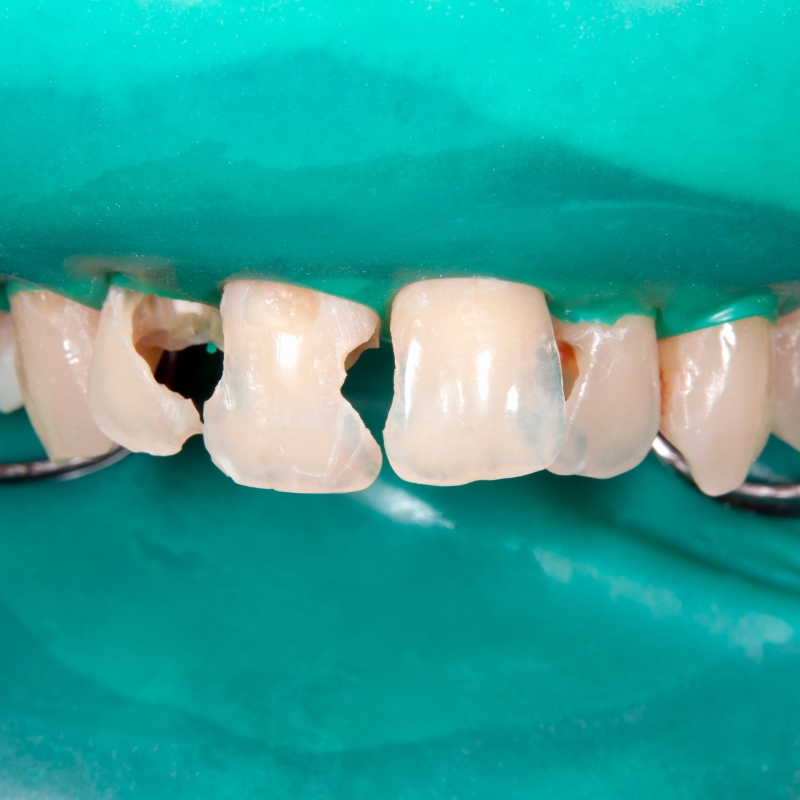
Why a Crack Is Different From a Cavity
A cavity usually eats into a tooth from the surface inwards. A crack is a different beast: a structural split that can travel unpredictably through hard enamel and on into the softer dentine beneath. Which direction that split runs makes a real difference to the fix. A fine craze line near the edge will often sit happily under a small composite filling. A vertical fracture down the centre is another matter, because every bite wedges the two halves a little further apart until the tooth eventually gives way. At that point the job is no longer about sealing decay. It is about splinting what remains of the tooth back into one working unit, and that is exactly what a crown does well.
Five Factors That Tip the Scale Toward a Crown
Melbourne dentists weigh up each of the factors below using a mix of visual inspection, trans-illumination, bite tests and digital radiographs. No single one settles the question by itself. It is the overall pattern that shapes the plan.
| Factor | Filling Usually Works | Crown Recommended |
| Crack length | Short, limited to enamel | Extends into dentine or down to gumline |
| Tooth location | Front incisor, low bite load | Molar or premolar taking heavy force |
| Cuspal involvement | No cusp undermined | One or more cusps split or undermined |
| Existing restorations | None or small resin | Large amalgam already present |
| Sensitivity symptoms | Occasional twinge | Pain on release after chewing, lingering heat sensitivity |
When three or more factors land in the Crown column, most clinicians will lean toward full-coverage protection.
There is room for judgement, though. A large filling can still do the job in an upper premolar if the opposing bite is light and the patient wears a night guard. Turn it around, and even a modest crack in a lower first molar can fail under daily load, well-bonded composite or not, especially in someone who chews a lot of hard food. Context matters as much as the checklist.
Crown Materials and What They Mean for Strength
The modern choices come down to lithium-disilicate glass-ceramic, monolithic zirconia and porcelain-fused-to-metal. Monolithic zirconia leads for sheer fracture resistance. Lithium-disilicate offers a mix of translucency and high flexural strength, which is handy when someone wants an invisible repair on an upper premolar that shows when they laugh. Porcelain-fused-to-metal is still a reliable workhorse for heavy grinders, though some patients prefer a metal-free option to sidestep the thin grey line that can appear at the gum after many years.
If you want to go deeper on the materials and the appointment timelines, our overview of dental crowns in Melbourne lays out the comparisons.
Will a Crown Always Outlast a Filling?
On the numbers, usually yes. A well-bonded composite on a cracked molar might give you six to eight years before leakage or further fracture forces a redo. A full-coverage crown on that same tooth often sails past fifteen years, provided the hygiene holds up and a bite guard is in play where it is needed. Those are averages rather than guarantees, but the gap is what explains why a crown, dearer on the day, can work out cheaper across two decades once you tally the repeat fillings and the possible root canal that a failing composite can lead to.
Cost and Chair Time: A Straight Comparison
A lot of Melbourne patients assume that stepping up to a crown means a run of long appointments. Chair-side CAD/CAM scanners and in-house milling have changed that. At High Dental Implants Melbourne a cracked molar can often be scanned, prepared and fitted with a zirconia crown inside a single extended visit, which does away with the temporary-crown stage altogether.
Out-of-pocket costs swing a fair bit depending on your health-fund rebates, but the gap between a large composite, which is around half an hour in the chair, and a crown, which runs one to two hours plus lab or milling fees, is still meaningful. The trick is to set that difference against the risk of an emergency down the track. A fractured cusp that shears off on a Friday night can pile on after-hours call-out fees and, in the worst case, end in an extraction and an implant.
Filling-First Strategy: When It Makes Sense
Not every crack calls for a crown. Front teeth under light chewing load, small hairline cracks caught early, and patients who are still weighing up the budget can all do well with a conservative composite build-up. Anyone also wondering what to do with a cracked or loose dental crown should get it looked at promptly, since the right treatment depends on whether the problem sits with the natural tooth, an existing crown, or both. In these cases, we photograph the crack, record its size, and ask the patient back in six months. Any widening, or any new symptoms, and the crown conversation is back on the table.
Bite Forces and Melbourne Lifestyle Considerations
Office workers grinding through stress-relief nuts, night-time clenchers and weekend AFL players all load their back teeth well above the average. Splints and mouthguards take some of the edge off, yet the force patterns still push borderline cracks toward failure faster than the textbook numbers suggest, which is why a dental crown procedure often comes up as a way to restore and protect a weakened tooth. Local eating habits pile on the cyclic fatigue too, whether it is a hard sourdough crust, a frozen acai bowl or the crackling on a Vietnamese pork roll. That particular blend of food and active living is a good part of why dentists here see more mid-crown fractures than a lot of interstate colleagues do.
The Decision Checklist You Can Use Tonight
- Note your pain triggers. Sharp on biting hard food, a dull ache after hot drinks, or just the occasional twinge?
- Estimate the size. Is the visible crack longer than about 4 mm, or does it wrap over the cusp?
- Check the location. Front or back, upper or lower, and is it on your heavy chewing side?
- Count the previous repairs. Is it a clean tooth or a patchwork of old amalgam?
- Think about the long game. Happy with a quick patch now, or keen to avoid another drill session for a decade?
Fillings tend to make sense when most of your answers land on the conservative side. Crowns move ahead when two or more red flags show up.
Closing Word on Timing
A cracked tooth is a moving target. Once the dentine is exposed, bacteria work their way in along the fracture line and start undermining fillings and crowns alike. Early treatment, whichever type you and your dentist settle on, keeps more of your natural tooth structure on your side of the ledger. Leave it too long, and even the best-made crown can arrive too late to save the root.
Clinics like ours tend to see good outcomes when a crack is picked up within weeks rather than months. If you can feel a vertical line with a fingernail, or you get that sharp pain on release after biting, it is worth booking an assessment rather than waiting for the next routine check-up. A timely call, backed by clear information, is still the most effective dental tool.