
Why Crowns Fail Over Time
Crowns are built to take years of chewing force. Invincible, they are not.
Everyday wear does its bit. So does night-time grinding, the odd knock, and the slow breakdown of the luting cement holding the whole thing on. Add a diet with plenty of crusty sourdough and other hard foods, and you can see why even a well-fitted crown might loosen or crack after a decade on duty.
Here’s what catches people out, though. The crown itself can be perfectly sound while the tooth underneath is quietly rotting. Or the gum recedes, exposes the junction, and bacteria slip in behind it. Which is why the early signs matter as much as they do. Ignore them, and a simple recement becomes a full replacement almost every time.
Spotting the Warning Signs Early
You don’t need X-ray eyes for this one. Keep an eye out for:
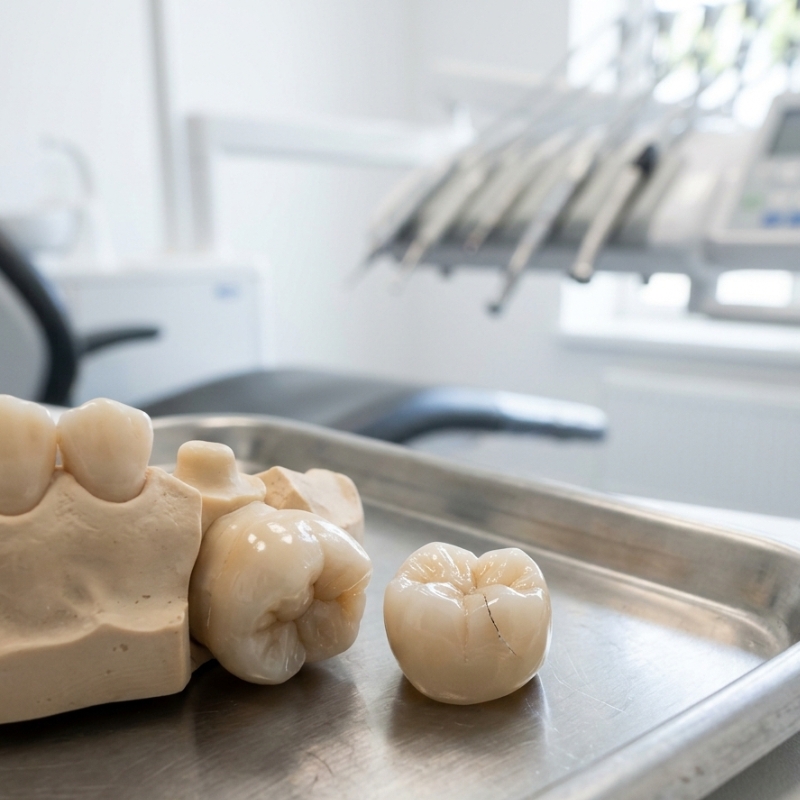
- A faint hairline across the porcelain that wasn’t there before
- A wobble. You’ll feel it with your tongue when you bite or when you floss
- Sudden sensitivity to hot and cold, or a metallic taste that won’t shift
- Food packing around one side of the crowned tooth, every single time you eat
Any of those, book in. Deal with it early, and what might have been a re-crown often turns out to be a quick chair-side repair instead. For patients searching for dental crowns in Melbourne, that first consultation is usually photographs, a small X-ray and a bite assessment. No treatment on the spot.
When a Quick Fix Will Do
Minor damage to the outer porcelain layer often polishes out or takes a small composite bonding patch. And if the crown has simply popped off with the tooth underneath still intact? Your dentist cleans both surfaces and recements it in a single visit. Short appointment. Rarely needs anaesthetic. Costs a fraction of a new crown.
Just know what composite can and can’t do. It bonds onto the existing porcelain, so it gets the shape and the look back. What it won’t do is match ceramic for longevity, and it can pick up stains over the years. A solid interim answer, then. Not a permanent one.
Knowing It’s Time to Replace
Repairs have limits. Your dentist will usually want to start fresh when:
- A crack runs right through the body of the crown
- The tooth underneath has decay or a fracture
- The bite has gone off, so the crown no longer meets the opposing tooth properly, and the jaw ends up taking the strain
- Recementing keeps failing, over and over, within months
Age matters here too, but only alongside the rest of it. A porcelain-fused-to-metal crown from the early 2000s has already served well past its average life expectancy, so if it’s giving you recurring grief, a planned replacement beats an endless run of patch-ups. Modern monolithic zirconia also sidesteps the porcelain chipping that PFM crowns are prone to.
But an old crown that’s still sound, still comfortable, causing no trouble at all? That doesn’t need replacing just for being old. For a closer look at longevity, our earlier post on how long dental crowns last sets out the typical lifespans and the warranty periods.
Repair vs Replace at a Glance
|
Situation |
Likely Solution |
Reason |
| Crown intact, cement failed | Recement | Tooth and material sound |
| Small porcelain chip, no pain | Chair-side composite repair | Restores appearance quickly |
| Crack through body, pain on bite | Full replacement | Structural integrity lost |
| Underlying decay present | Replacement plus filling or root canal | Treats source of failure |
| Crown over 12 years old with repeated issues | Planned replacement | Avoids ongoing disruptions |
What to Expect During Replacement
Smoother than most patients remember, this part. Digital intra-oral scanners have replaced the conventional trays in most cases, which takes the gag-reflex worry off the table entirely. Your dentist removes the old crown, cleans the tooth, deals with any decay, and reshapes where it’s needed.
Then it’s one of two pathways.
- Same-day CAD/CAM. In-surgery milling units such as CEREC design and mill your new crown from zirconia or lithium disilicate, then sinter and glaze it on site. One appointment instead of two. Set aside a couple of hours, mind you, rather than expecting a quick coffee break.
- Lab-made. The scan goes off to a Melbourne dental laboratory. You wear a tidy temporary for roughly ten days, then come back in for the fitting and the occlusion checks.
Either way, you get precise colour matching and high-strength ceramics. Which route you land on usually comes down to the complexity of your bite, and to how much the cosmetics matter to you.
Typical Costs and Waiting Times
Victorian private fees move around a fair bit. It depends on the material, on the clinic’s location, and on whether anything extra is needed, such as a core build-up. Rule of thumb: a repair runs to a few hundred dollars, while a replacement crown usually climbs past the thousand-dollar mark. Health insurance with major dental extras may reimburse a decent chunk of that, so check your fund’s annual limits before you commit to anything.
On timing, recements and small repairs often get slotted in inside the week. Full replacements stretch across two or three visits over a fortnight, unless you go the same-day route.
Keeping Crowns Trouble-Free
Prevention still beats any repair, and none of it is complicated. Brush twice a day with a soft toothbrush. Floss gently around the crown margin. And if you clench in your sleep, ask your dentist whether a custom-made night guard makes sense in your case. Regular check-ups let them catch the early wear long before it turns into something bigger. For more everyday oral hygiene advice, see the guide to caring for your teeth.
Final Word
A cracked or loose crown is a nuisance. It’s rarely a disaster, though, so long as you deal with it early. Minor damage often gets patched or recemented on the spot. Deeper fractures and hidden decay are the ones that call for a fresh start with today’s materials. So listen to the warning signs. Lean on the digital diagnostics your dentist has to hand. And keep that maintenance routine tight, because it’s what gives a restored tooth its best shot at a long and quiet life.