
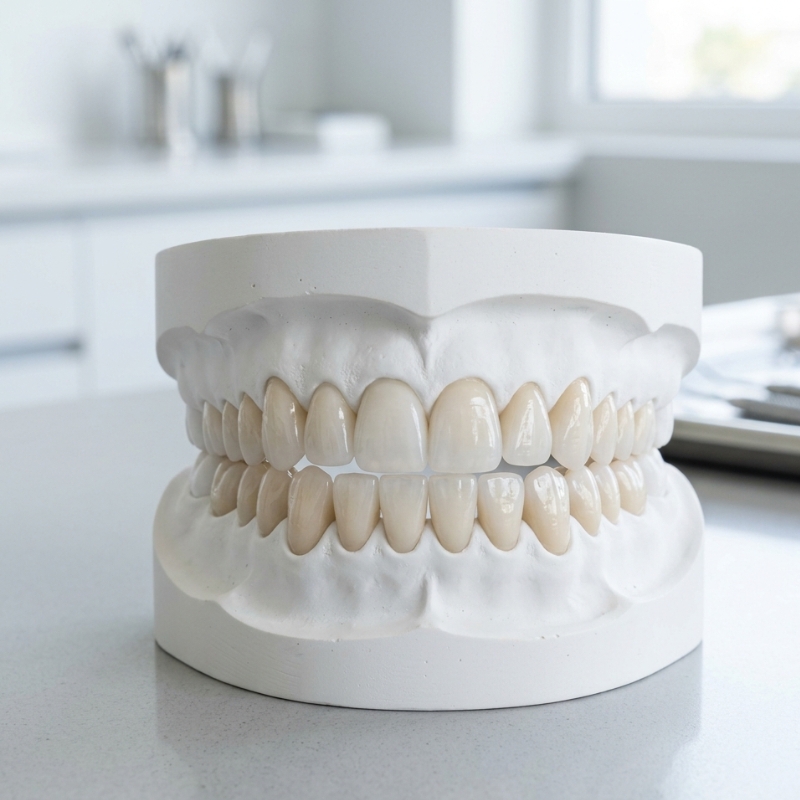
A chipped or uneven front tooth can feel like it’s the only thing people notice, even if it’s tiny. In Melbourne, it’s a common story: a coffee lid slips, you cop an accidental elbow playing sport, or you realise in photos that your front edges aren’t as even as you thought—then you start wondering, what are dental veneers, and whether they’re the right option for your smile.
The good news is you often have several ways to improve front teeth without braces. The trick is choosing an option that matches what’s actually going on, because “uneven” can mean different problems:
• a small enamel chip
• rough or jagged edges
• teeth that are different shapes or lengths
• teeth that are slightly rotated or crowded
• changes from grinding (bruxism) or enamel wear
• old fillings that have stained or chipped
This guide walks you through the most common cosmetic options, when each makes sense, what to expect for longevity, and the “red flags” that mean you shouldn’t wait.
First, work out what “uneven” really means
Before anyone can recommend the right fix, it helps to separate the two categories:
• Shape issues: edges are chipped, worn, or have naturally different lengths
• Alignment issues: the teeth are crowded, rotated, or sitting out of line
Shape issues can often be improved quickly with conservative cosmetic work. Alignment issues may still be addressed without braces, but usually involve tooth movement (for example, clear aligners) or a combination approach.
A quick self-check you can do at home
Stand in good light and look closely:
• Do you see a sharp edge that catches on your lip?
• Is there a small corner missing from one tooth?
• Do the teeth look straight, but the edges are uneven?
• Do the teeth overlap or twist slightly (rotation/crowding)?
• Is there sensitivity to cold, sweetness, or biting pressure?
• Does your bite feel “different” since the chip happened?
If you have pain, bleeding from the gums after impact, swelling, a visible crack line, or your bite feels off, treat it as urgent. Health authorities recommend seeing an oral health professional as soon as possible after a tooth injury, even if it looks minor.
What to do right after you chip a front tooth
If the chip is fresh (especially from a knock), your first steps can protect the tooth and improve the chance of a simple repair.
• Rinse gently with water
• If the edge is sharp, cover it with orthodontic wax (from a pharmacy) to stop it from cutting your lip
• Avoid biting into hard foods with that tooth
• If you have the broken piece and it’s intact, keep it moist (for example, in milk) and bring it with you
• Book an assessment promptly, especially if there’s pain or sensitivity
Better Health Channel also notes that if a tooth fragment is intact, it can be stored in milk or saliva, and you should see an oral health professional as soon as possible.
The best cosmetic fixes without braces (from simplest to most involved)
There isn’t one “best” solution for everyone. The best option is the one that:
• suits the size and location of the chip/unevenness
• fits your bite and habits (like grinding)
• matches your aesthetic goals (shape, symmetry, colour)
• is maintainable long term
Option 1: Tooth contouring (enamel reshaping)
If your front teeth are mostly straight but the edges look uneven, tiny adjustments to the enamel can sometimes make a surprising difference.
This can work well for:
• small uneven edges
• minor chips that are very shallow
• teeth that are slightly different lengths (within a small range)
What it’s like:
• usually quick
• little to no discomfort
• results are immediate
Limits to know:
• it’s only for small changes
• it isn’t right if the enamel is already thin, if there’s a crack, or if the tooth is sensitive
• you can’t “add” material with contouring (it only removes a small amount)
Q&A: Can contouring damage my tooth?
If it’s conservative and planned properly, contouring can be safe for suitable cases. The key is that it must be minimal and controlled, because enamel doesn’t grow back. If your tooth is already worn from grinding or erosion, you may need an additive option instead (like bonding) rather than more enamel removal.
Option 2: Composite bonding (edge bonding)
Composite bonding uses tooth-coloured resin to rebuild a chipped corner, smooth a jagged edge, or even out small shape differences.
This can work well for:
• a noticeable corner chip
• uneven edges where you need to “add” shape
• closing small gaps visually
• improving symmetry between the two front teeth
What it’s like:
• often completed in one visit
• the dentist shapes the resin to match your tooth
• shade is chosen to blend in naturally
Real-world considerations:
• it can stain over time (coffee, tea, red wine)
• it can chip if you bite nails, crunch ice, or use teeth as tools
• it may need touch-ups or replacement in the future
Q&A: Is bonding the quickest cosmetic fix for a chipped front tooth?
For many small-to-moderate chips, yes. Bonding is often one of the fastest ways to restore a natural look without tooth movement. But if the chip is deep, the tooth is cracked, or your bite puts heavy pressure on that edge, a more protective option may be recommended.
Option 3: Whitening first, then shape correction
If your main concern is that the tooth looks uneven and dull or mismatched in colour, a staged approach can help:
• whiten first to lift the overall shade
• then do small repairs (bonding or reshaping) to match the brighter colour
Why this order matters:
• bonding material doesn’t whiten as enamel does
• If you bond first and then whiten, the bonding might stand out later
This can work well for:
• minor chips plus general discolouration
• people who want a brighter smile without major shape change
Q&A: Will whitening fix uneven teeth?
Whitening won’t change tooth shape or alignment, but it can make unevenness less noticeable by reducing contrast between teeth, old fillings, and stains. It’s often best seen as a “foundation step” before small cosmetic corrections.
Option 4: Clear aligners (still “no braces”, but yes tooth movement)
If the “uneven” look is actually mild crowding, rotations, or one tooth sitting forward, clear aligners can be a braces alternative (even though they are still orthodontic treatment).
This can work well for:
• mild-to-moderate crowding
• small rotations
• aligning edges by moving teeth into better positions
What to expect:
• treatment typically takes months, not days
• you need to wear aligners consistently
• you usually need retainers afterwards to maintain results
Where aligners shine:
• when the shape is fine, but the position is the issue
• when you want a more even smile without changing tooth structure much
Q&A: Can aligners fix a chipped tooth?
Aligners can improve position, but they don’t restore missing tooth structure. If you’ve got both alignment and a chip, many people do aligners first, then bonding or another cosmetic step to perfect the edges at the end.
Option 5: Veneers (for broader shape goals, not just a single chip)
Veneers can be considered when you want a more comprehensive change across one or more front teeth: shape, length, symmetry, and sometimes colour (depending on the case and material).
Veneers may make sense if:
• you have multiple front teeth with uneven edges or shapes
• the teeth are generally straight enough, but look mismatched
• you want a more consistent smile line across the front teeth
• you’ve had repeated bonding repairs that keep chipping or staining
• you want a predictable cosmetic change across several teeth
Important nuance:
Veneers aren’t automatically “better” than bonding. They’re a different tool that can be a better match when the goal is larger or more uniform changes across the smile zone.
If you’d like to explore whether veneers belong in your options set, you can start by browsing dental veneer options.
Q&A: Are veneers the best fix for uneven front teeth?
They can be, particularly when unevenness is a repeated theme across several front teeth or when shape and colour goals are bigger than what bonding/contouring can reliably achieve. But for a single small chip, a conservative repair is often enough.
Option 6: A crown (when the tooth needs protection more than cosmetics)
Sometimes, a front tooth looks “cosmetic”, but it’s actually structurally compromised:
• a large fracture
• a heavily filled tooth
• a crack that threatens long-term strength
• trauma affecting the inner tooth
In those cases, a crown may be recommended to protect the tooth, not just improve appearance.
Crowns can be considered when:
• The tooth has lost a lot of structure
• the edge breaks repeatedly
• there’s a significant weakness
Q&A: How do you know if you need a crown instead of bonding?
A dentist looks at how much healthy tooth is left, the depth of the chip, crack lines, bite forces, and whether the tooth has had root canal treatment or large restorations. If the tooth is likely to fail with a small repair, protection becomes the priority.
A simple “choose your path” guide
Use this as a starting point before you book in:
If you have a tiny chip or slightly uneven edges
- contouring may be enough
• or small bonding for a corner or edge
If you have one noticeable chip, but the tooth is otherwise healthy
- bonding is often a strong first option
• consider whitening first if colour is also a concern
If your teeth are straight, but the front shapes don’t match
- bonding for targeted shape changes
• veneers if you want a bigger, more uniform change across several teeth
If the teeth are crowded/rotated (alignment issue)
- clear aligners may be the most logical fix
• cosmetic finishing (bonding) can refine edges afterwards
If there’s pain, sensitivity, swelling, or a bite change
- don’t self-diagnose
• get assessed promptly, as recommended for dental injuries
What your dentist will usually check before recommending anything
Even for a “cosmetic” concern, a good plan is based on function and risk:
• tooth structure: how much enamel is available
• bite: where pressure lands when you bite and chew
• crack lines: especially after trauma
• gum health: symmetry and stability of the gumline
• habits: grinding, clenching, nail biting, chewing ice
• existing dental work: old bonding or fillings that may need replacement
• shade goals: whether whitening should happen first
Q&A: Why does my bite matter if it’s just a small chip?
Because front teeth can take heavy forces during certain movements (especially if you grind). If the chip sits exactly where your bite hits, a cosmetic repair might keep failing until the bite and habits are addressed.
How long do these options last?
Longevity depends on the option, your habits, and your bite. A practical way to think about it:
• contouring: long-lasting if conservative (because there’s nothing to “wear off”), but only suitable for tiny changes
• bonding: can last well but may stain or chip over time, especially with heavy bite forces or habits
• aligners: results can be stable with consistent retainer wear
• veneers/crowns: can be durable, but still require care and can chip if stressed
If you play contact sports or grind your teeth, protecting your work matters. Better Health Channel highlights mouthguards as a key way to prevent dental injuries, especially in sports where teeth can be damaged.
Prevention tips that protect your smile investment
Small everyday choices can be the difference between a repair lasting years and breaking again quickly.
• Wear a custom mouthguard for contact sports
• If you grind, ask about a night guard
• Don’t bite fingernails, ice, bottle caps, or hard lollies
• Cut crunchy foods (like apples) instead of biting with your front teeth
• Keep up regular check-ups so tiny issues don’t turn into big repairs
• If you chip a tooth, don’t wait for it to “settle” if you notice sensitivity or bite changes
How veneers fit in without turning this into a “veneer-only” decision
Some people worry that considering veneers means they’re “going extreme”. In reality, veneers are simply one option on the spectrum. They tend to fit best when the goal is:
• a consistent shape across multiple front teeth
• longer-looking teeth (if suitable)
• a smoother, more symmetrical smile line
• a more predictable cosmetic outcome than repeated small repairs
If you’re weighing cosmetic choices and want the veneer conversation to be part of it (without guessing), a helpful next step is to learn about dental veneers in the context of your broader options.
Questions to ask at your appointment
Bring these along to keep the conversation clear and decision-focused:
• What’s causing the uneven look: shape, alignment, wear, or old dental work?
• Do you see any crack lines or bite issues that affect which option is safest?
• Should whitening be done first for the most natural shade match?
• Which option is most conservative for my tooth structure?
• What will maintenance look like in 1 year, 5 years, and beyond?
• If I grind my teeth, how will we protect the result?
If you want help translating “what I want it to look like” into a practical plan, you can discuss your cosmetic goals and ask for a staged approach that fits your teeth, habits, and timeline.
FAQ
Can a dentist fix a chipped front tooth in one visit?
Often, yes — especially for small-to-moderate chips where bonding is suitable. If there’s a deeper fracture, crack, or nerve involvement, the plan may take more than one step.
What if my chipped tooth doesn’t hurt?
Pain isn’t the only indicator of a problem. Chips can create weak points, sharp edges, or crack pathways. If it happened from trauma or you notice sensitivity or a bite change, it’s worth getting assessed promptly.
Is bonding or contouring better for uneven front edges?
Contouring can be great for tiny shape differences where you only need to smooth or slightly reshape enamel. Bonding is better when you need to add material to rebuild a corner or lengthen an edge.
Will clear aligners fix uneven front teeth?
They can, if the unevenness is mainly due to tooth position (crowding/rotation). If it’s a chip or wear issue, aligners won’t restore missing tooth structure — you may still need bonding or another cosmetic step afterwards.
When do veneers make sense for chipped or uneven front teeth?
Veneers can make sense when you want a more uniform change across multiple front teeth, when shape issues are repeated (not just one small chip), or when you want a more predictable cosmetic transformation than ongoing small repairs.
When is a chipped tooth an emergency?
Seek prompt advice on what to do after a dental injury if you have significant pain, swelling, bleeding, a visible crack line, or your bite feels different. Public health guidance recommends seeing an oral health professional as soon as possible after a tooth injury.