
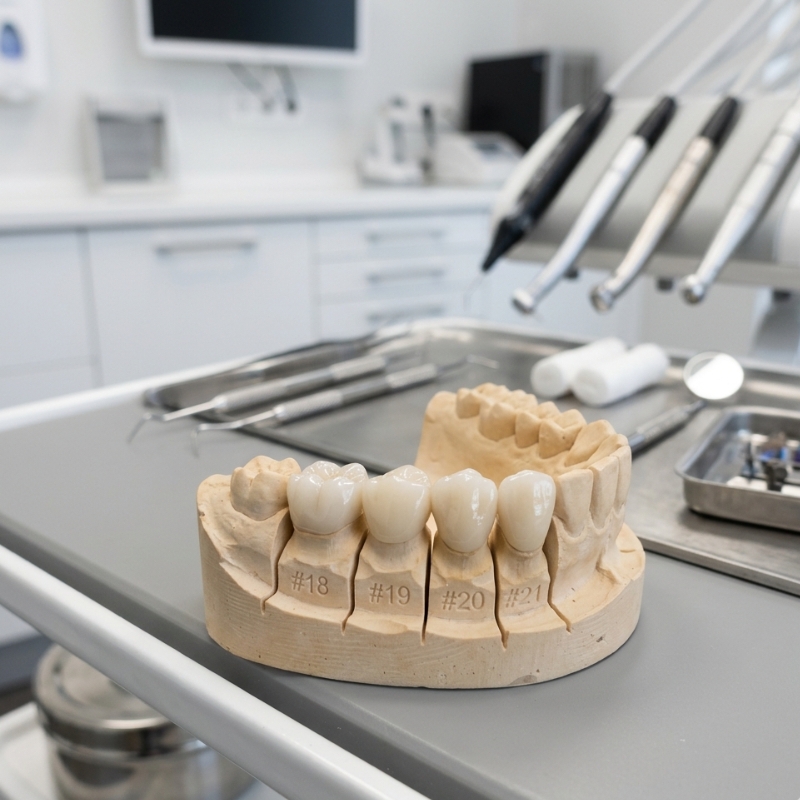
If you’ve ever looked at an old filling and wondered, “How much longer will this hold up?”, you’re not alone. Most tooth restorations don’t “expire” on a set date — they wear, age, and sometimes fail based on a mix of material, bite forces, oral hygiene, diet, and whether you grind or clench.
Material does matter, but it’s rarely the only factor. In real life (including here in Melbourne), restorations usually last longest when the tooth is kept clean at the margins, the bite is stable, and harmful habits (like nightly grinding or chewing ice) are controlled.
This guide walks through typical lifespan ranges for common restorations, what makes them last longer, and how to spot early warning signs before you end up with pain, a broken tooth, or a much bigger repair.
What counts as a “tooth restoration”?
A tooth restoration is any treatment that repairs, rebuilds, or replaces part of a tooth (or a tooth itself) so you can chew comfortably and protect the underlying structure. Common examples include:
• Fillings (composite resin, glass ionomer, amalgam)
• Inlays/onlays (ceramic, composite, metal)
• Veneers (usually porcelain/ceramic or composite)
• Crowns (ceramic, zirconia, porcelain-fused-to-metal, gold/metal)
• Root canal-treated teeth with restorations (often require extra protection)
• Implant restorations (the visible tooth-like crown attached to an implant)
Q: What’s the “best” restoration?
The best restoration is the one that fits your tooth’s needs and your risk factors: where the tooth is in your mouth, how heavily you bite, how clean the margins can be kept, and whether you grind/clench. A front tooth with a small chip has very different requirements than a heavily restored back molar that takes the full force of chewing.
Typical lifespan ranges (and why they vary so much)
Because every mouth is different, lifespan is usually discussed as a range, not a guarantee. Here are realistic, patient-friendly ranges to understand what’s common — with the key reminder that habits and decay risk can move you to the low or high end.
Fillings
• Composite resin (tooth-coloured): often around 5–10+ years, sometimes longer, with good conditions
• Glass ionomer (often used in specific cases): can be shorter-lived in high-load areas
• Amalgam (silver): can last a long time in the right situation, though it’s used less often today
Why they fail: wear, chipping, cracking, or (most commonly) new decay sneaking in at the edges where the filling meets the tooth.
Inlays and onlays
- Often around 10–15+ years, sometimes longer, depending on the material and bite
Why they fail: cracking under heavy bite forces, debonding (coming loose), or decay at the margins.
Veneers
- Often around 7–15+ years, depending on material and habits
Why they fail: chipping, debonding, cracking, or gum changes that reveal margins.
Crowns
Crowns are one of the most important “workhorse” restorations because they can protect a heavily damaged or weakened tooth. In everyday terms, crowns often last well into the 10–15+ year range — and sometimes far longer — when the bite is stable, and margins are kept clean.
Why they fail: decay at the edges, cement breakdown, fractures/chipping, or bite stress (especially with grinding/clenching).
If you want to understand how crowns are used and maintained in your local context without turning this into a “sales page”, you can read about dental crowns in Melbourne as a deeper educational next step.
Implant restorations (the crown on an implant)
The implant itself and the restoration on top are different components. The visible tooth-like part can wear or chip like any other restoration, and the connection components may need maintenance over time.
Why they fail: chipping, loosening of components, bite stress, or hygiene issues around the implant.
Does the material matter? Yes — but here’s how to think about it
Material choice influences durability, aesthetics, wear, and how it behaves under pressure. But even the strongest material can fail early if the tooth-restoration junction isn’t kept clean or if bite forces are extreme.
Composite resin (tooth-coloured filling material)
Best for: small-to-medium repairs, cosmetic blending
Common strengths: conservative, aesthetic, repairable
Common weaknesses: can wear or stain over time; can chip under heavy forces
Ceramic/porcelain (including zirconia)
Best for: aesthetics and many indirect restorations
Common strengths: great appearance; strong when well-designed
Common weaknesses: can chip/fracture in certain situations, especially under grinding or edge-to-edge bite patterns
Porcelain-fused-to-metal (PFM)
Best for: certain functional cases where a metal base adds support
Common strengths: durable base, proven history
Common weaknesses: porcelain layer may chip; aesthetic compromises compared with all-ceramic in some smiles
Gold/metal alloys
Best for: high-load areas where wear-resistance and fit are priorities
Common strengths: excellent longevity in many cases; kinder wear to opposing teeth in some contexts
Common weaknesses: aesthetics (it’s visible), and not everyone wants metal
Q: Which material lasts the longest?
Often, longevity is less about “the strongest material” and more about “the right material for your bite.” For example, a beautifully aesthetic ceramic restoration can still fail early if you grind nightly and don’t protect it. Meanwhile, a more wear-tolerant material in the right design may last much longer in the same mouth.
What usually determines how long a restoration lasts?
Think of restoration lifespan as the result of five interacting forces. Improve these, and you generally improve longevity.
1) Decay risk at the margins
The most common reason restorations fail is recurrent decay (new decay at the edge). This is less about the restoration “wearing out” and more about bacteria getting a foothold where plaque sits.
What helps:
• Brushing along the gumline twice daily
• Cleaning between teeth (floss/interdental brushes)
• Managing frequent snacking and sugary drinks
• Regular check-ups to catch early margin changes
In Australia, general oral health guidance includes routine dental check-ups as part of prevention — see Healthdirect’s dental check-up guidance for a straightforward overview.
2) Bite force and tooth position
Back teeth take the majority of the chewing force. A restoration that might thrive on a front tooth can wear faster on a molar, especially if you have a heavy bite.
What helps:
• Bite adjustment when needed
• Avoiding hard-object habits (ice, pens, fingernails)
• Addressing clenching/grinding
3) Grinding and clenching (bruxism)
If you wake up with jaw tension, headaches, or you’ve been told you “wear your teeth down,” bruxism may be shortening the lifespan of restorations. Grinding concentrates high force in ways normal chewing doesn’t.
What helps:
• A professionally fitted night guard (where appropriate)
• Reviewing stress triggers and sleep factors
• Not ignoring early chipping — it often predicts bigger failure later
4) Restoration design and tooth condition underneath
A restoration is only as predictable as the foundation. Teeth with large old fillings, cracks, or root canal treatment can be more fragile and may need more protective designs.
What helps:
• Choosing a design that reinforces the tooth
• Monitoring cracks over time
• Not delaying review if symptoms change
5) Daily wear, diet, and acidity
Coffee and tea can stain, acidic drinks can soften enamel and contribute to wear, and frequent snacking means frequent “acid attacks.” In Melbourne life, it’s easy to sip coffee all morning and snack between meetings — small habits add up.
What helps:
• Keep acidic drinks to mealtimes when possible
• Rinse with water after acidic drinks
• Wait a little before brushing after very acidic intake
• Use a soft toothbrush and gentle technique to avoid gumline abrasion
The “normal ageing” vs “failing” difference
Not all changes mean failure. A restoration can look older and still function well — but some symptoms are true red flags.
Normal ageing signs (often monitored at check-ups)
• Mild staining on composite fillings
• Minor surface wear without pain
• Small changes in shine or texture
• Slight margin visibility with gum changes
Signs a restoration may be failing (book an assessment)
• Pain when biting or chewing
• A restoration that feels “high,” “loose,” or different when you bite
• Persistent sensitivity to cold/heat that doesn’t settle
• Visible cracks or a chunk missing
• Food packing in a new gap
• Bad taste or recurring gum irritation around one tooth
• Swelling, a pimple-like bump on the gum, or throbbing pain (more urgent)
Q: Why does a restoration fail if it looks fine?
Because the problem often starts at the edge where the tooth meets the restoration. Decay at the margin can be hidden until it’s advanced. Bite micro-movements can also loosen cement or bonding over time without a dramatic visible break.
How to make restorations last longer (practical, not preachy)
These steps aren’t about perfection — they’re about reducing the main failure drivers: plaque at margins and excess force.
Daily habits that help most
• Brush twice daily, spending extra time along the gumline around restorations
• Clean between teeth once daily (this is where margin decay loves to start)
• If you snack often, consider fewer “grazing windows” to reduce acid cycles
• Use a protective approach if you grind (don’t wait for a big break)
• Don’t use teeth as tools (opening packets, biting hard plastics)
Crown-specific care that people often miss
Crowns can last a long time, but the tooth underneath can still decay where the crown meets the tooth. That junction is the “make-or-break” zone.
If you have a crown, focus on:
• Cleaning the gumline thoroughly
• Cleaning between the crowned tooth and its neighbours
• Getting bite checked if you feel a new “high spot”
• Not ignoring mild pain on chewing
For a practical breakdown of day-to-day habits that support longevity, see these tooth crown aftercare tips (useful even if you have other restorations too).
Repair vs replace: what usually happens?
People often hope a worn restoration can simply be “topped up.” Sometimes it can — sometimes it shouldn’t.
When repair is sometimes possible
• Minor chipping on certain materials
• Small edge defects where margins are still healthy
• Cosmetic refinishing for stains or roughness
• Re-bonding in select cases (depending on why it loosened)
When replacement is more likely
• New decay at the margin
• Significant cracks in the tooth or restoration
• Repeated debonding (keeps coming loose)
• Bite-related fractures
• Pain suggesting deeper tooth issues
Q: Is it bad to “wait and see”?
It depends on what you’re waiting on. A small cosmetic issue might be safe to monitor, but pain on biting, a loose feeling, swelling, or a visible crack can turn a manageable fix into a bigger job if ignored.
“When should I get it checked?” A simple decision guide
Use this as a practical filter.
Get it checked soon (next available routine appointment)
• You notice a new rough edge, snagging floss, or food trapping
• Sensitivity that’s mild but persistent for more than a week or two
• A restoration looks worn, and you haven’t had it reviewed in a while
• You suspect grinding/clenching (jaw tension, flat worn tooth edges)
Seek faster review (don’t delay)
• Pain when chewing or biting
• A restoration feels loose, or your bite has suddenly changed
• A chunk broke off, or a crack appeared
• Gum swelling near one tooth, or a persistent bad taste
If you’re unsure, it’s reasonable to organise a dental crown assessment style review approach (even for non-crown restorations) because a proper exam and imaging — when clinically needed — is what clarifies whether it’s a surface issue, a bite issue, or decay at the margins.
Common Melbourne scenarios that shorten restoration lifespan
These are patterns dentists see often, and they’re very “real life.”
The all-day coffee sipper
Sipping coffee all morning can mean frequent exposure (especially if sugar is involved), and constant snacking can keep the mouth acidic. This doesn’t instantly “ruin” restorations, but it increases decay risk at margins.
The gym and sport enthusiast
Accidental knocks happen — and teeth can chip on bars, mouthguards that don’t fit well, or contact sports. A custom mouthguard (when relevant) is a simple longevity booster.
The night grinder who doesn’t know they grind
Many people don’t realise they grind because it happens in sleep. Clues include jaw fatigue, morning headaches, small chips, and restorations that keep fracturing “for no reason.”
The “I only brush, I don’t floss” routine
Interdental areas are where margin decay commonly starts. Even excellent brushing can miss the key failure zone between teeth.
Q&A blocks (quick, practical answers)
Q: How long do tooth restorations last on average?
Most restorations fall into broad ranges depending on type and conditions: fillings often around 5–10+ years, indirect restorations like inlays/onlays often 10–15+ years, veneers often 7–15+ years, and crowns commonly 10–15+ years (often longer) when decay risk and bite forces are well managed.
Q: If I’ve had a restoration for 15 years, should I replace it “just because”?
Not automatically. Many restorations last beyond averages. The decision should be based on signs of failure (decay, cracks, loosening, symptoms) and what your dentist can see clinically and on X-rays — not just age.
Q: What’s the most common reason restorations fail?
Recurrent decay at the margins is a big one. Bite stress and grinding also play a major role, especially for back teeth and larger restorations.
Q: Can a restoration be “fine” but still cause sensitivity?
Yes. Sensitivity can come from bite stress, small cracks, gum recession exposing root surfaces, or margin issues that aren’t obvious to the naked eye. Persistent sensitivity is worth checking.
Q: Do crowns stop decay?
Crowns protect the tooth structure, but the tooth underneath can still decay at the edge where the crown meets the tooth — especially if plaque accumulates there. That’s why cleaning around the gumline and between teeth is essential.
Final FAQ
How do I know whether staining means my restoration is failing?
Staining alone usually isn’t a failure. Warning signs are pain on biting, looseness, recurrent sensitivity, visible cracks, or floss catching at the margin. If you’re unsure, a check-up can confirm whether it’s cosmetic ageing or a structural problem.
Does material matter more than hygiene?
Material matters, but hygiene at the margins is often the deciding factor. Even an excellent material can fail early if plaque sits at the edge long enough to cause decay.
Why do back teeth restorations fail more often?
Back teeth take higher forces. They also have grooves and contact points that trap food, increasing wear and margin stress. Grinding/clenching amplifies this.
If I grind my teeth, what’s the single best thing I can do?
Get it identified early and protect restorations from overload. Grinding is one of the fastest ways to chip, crack, or loosen restorations that would otherwise last much longer.
Can you always repair a chipped restoration?
Not always. Small chips may be repairable, but if the tooth underneath is cracked or if margins are compromised by decay, replacement is often the safer option.
How often should restorations be checked?
A good rule is to have restorations reviewed during routine dental examinations, because many early failures (especially margin decay) don’t hurt until they’re advanced. For general preventive guidance, Healthdirect’s overview of dental check-ups is a helpful reference.