
Why Bone Volume Matters
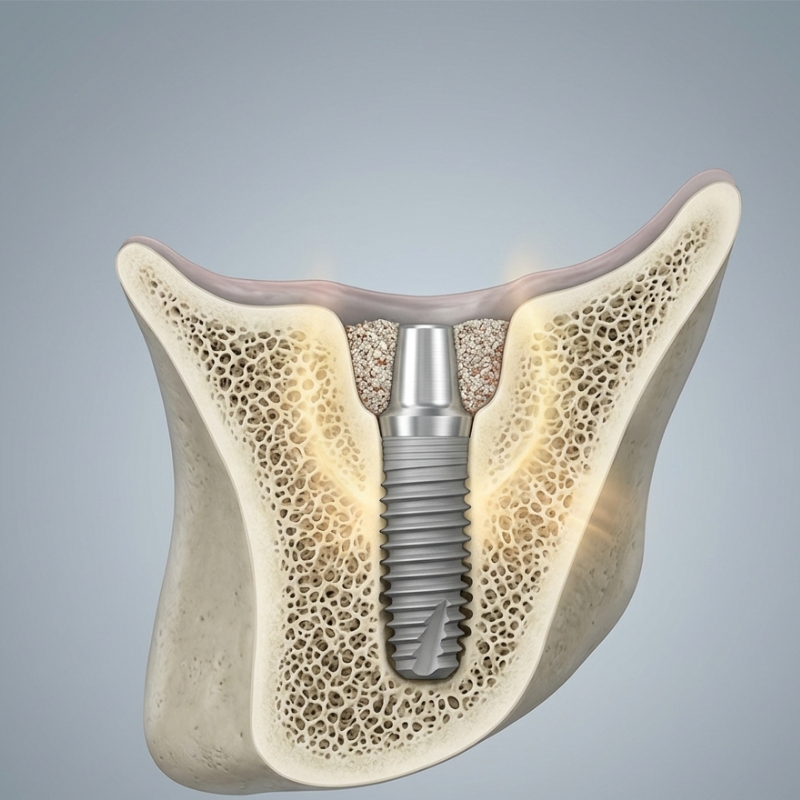
To anchor an implant, the titanium post needs enough healthy jawbone on all sides. Gum tissue on its own cannot stabilise the fixture. Once a tooth has been missing for a few months, the surrounding bone starts to shrink, simply because it no longer gets any pressure from chewing. Front teeth in the upper jaw lose width fastest. Back molar sites tend to lose height instead. So Melbourne clinicians will routinely check three measurements before confirming you’re suitable for an implant: height, width and density.
If the scans show thickness below roughly 6 mm, most surgeons will want to rebuild the area with a graft first. It’s a precaution that lifts long-term success rates and lowers the risk of the implant fracturing thin bone. Patients who move quickly after an extraction often hang onto enough bone to go ahead with a straightforward single tooth implant without any extra procedures at all.
How Dentists Judge Your Jaw
Cone beam CT imaging gives a 3-D view of the site, picking out the nerves, the sinus borders and any voids left behind by infection. Alongside the scan, a clinician weighs up:
- Age and general healing capacity
- Gum thickness, since thin biotypes are prone to recession
- Smoking history
- Medical conditions such as osteoporosis or diabetes
- Bite force, because strong grinders sometimes need broader implants or reinforcement
Each factor shifts the risk-benefit equation. A young non-smoker with solid bone but a high smile line, for instance, may still need a small connective-tissue graft to avoid a visible gap above the future crown. A back molar that sits low in the smile, on the other hand, usually prioritises function over cosmetics.
Bone density itself varies a good deal from person to person. Upper jaws tend to be softer than lower ones. Density generally declines with age, and post-menopausal women can see it fall further, which is exactly why osteoporosis comes up in the medical history. The longer a tooth has been missing, the less bone is likely to be left as well. None of that is destiny. It just means the assessment has to be done on your jaw, rather than on an average.
Graft or No Graft: Typical Scenarios
Plenty of patients arrive expecting a graft, because they’ve read the general implant articles online. The reality is more nuanced than that.
|
Situation |
Likelihood of graft |
Notes |
| Extraction and implant placed the same day | Low to moderate | Immediate implants preserve bone; a micro-graft may fill minor voids |
| Missing tooth for 12+ months, front upper jaw | High | Width is often under 4 mm; a particulate graft or a small block is common |
| Lower molar lost to a crack last month | Moderate | Height is often adequate; ridge-split is rarely needed |
| Heavy smoker, poor oral hygiene | High | Surgeons prefer extra bone volume as a safety margin |
| Sinus encroaches on the upper back jaw | High | Sinus lift with graft granules adds 3 to 6 mm of height |
The table shows trends, not rules. In some cases, platelet-rich fibrin membranes can encourage natural bone fill without any donor material going in at all. There’s more on timelines in our explainer on dental implant healing time.
Living With a Grafted Site
A graft adds cost, and it stretches the overall treatment schedule. For a small particulate graft, the extra fee in Melbourne usually runs to a few hundred dollars. Block grafts and sinus lifts can add considerably more. Healing periods vary:
- Small socket preservation graft: 8 to 12 weeks
- Lateral ridge augmentation: 4 to 6 months
- Sinus lift: 6 months plus
Through this phase, you might wear a temporary flipper or lean on the neighbouring teeth for support. A few things help the graft mature undisturbed. Stick to soft food for the first fortnight. Clean meticulously, with saltwater rinses and gentle brushing. And keep pressure off the site from any removable plate.
Health insurance extras rarely cover grafting, though some of the major dental policies will partly refund surgical theatre fees. Ask your fund before you book the surgery. For pain control, most patients get by on paracetamol or ibuprofen. Bruising tends to peak around the 48-hour mark, then settles quickly enough with cold compresses and a bit of head elevation.
The Australian Government’s Healthdirect guide on dental implants outlines general safety standards and underscores the importance of accredited practitioners. Always confirm your surgeon holds AHPRA registration and uses TGA-approved biomaterials.
Questions to Ask at Your Consultation
Clarity early on saves you surprises later. These are worth raising:
- Which imaging findings triggered your graft recommendation?
- What material will you use? Mineral-based, donor human bone, or my own?
- Can the graft and implant go in together, or is staging safer in my case?
- How long before the crown can be fitted and normal biting resumes?
- What maintenance steps lower the chance of graft failure?
- Are there alternative treatments, such as a short implant or an adhesive bridge?
Most reputable Melbourne clinics will hand you a written plan setting out the stages, the fees and the expected healing times. Keep that document somewhere handy, so you’ve got something to compare against if you go for a second opinion.
Bone grafting isn’t a one-size-fits-all rule. Get assessed quickly once a tooth comes out. Keep the at-home care up. And have an open conversation with your implant dentist, because between them those three things often remove the need for major grafting altogether. Where rebuilding is unavoidable, modern techniques can create a stable foundation for the implant, though outcomes always depend on the individual. Understanding why the graft is being recommended, how it works and when it happens is what turns the whole thing from daunting into manageable.