
Why Tooth Replacement Choices Matter
A missing tooth does more than spoil a smile. The neighbouring teeth start to drift. Chewing efficiency drops off. And the bone in the gap slowly shrinks away. Most Melburnians end up narrowing the field to a fixed dental implant or a traditional bridge. Before booking anything, though, it pays to understand how each option behaves across the next decade, rather than only what happens on the day of treatment. You’ll hear different numbers quoted for upfront cost, too, so getting a handle on the hidden maintenance workload is what sets realistic expectations. If you want a refresher on the hardware itself, our guide to a dental implant covers the science behind the titanium post.
How a Single Implant Works
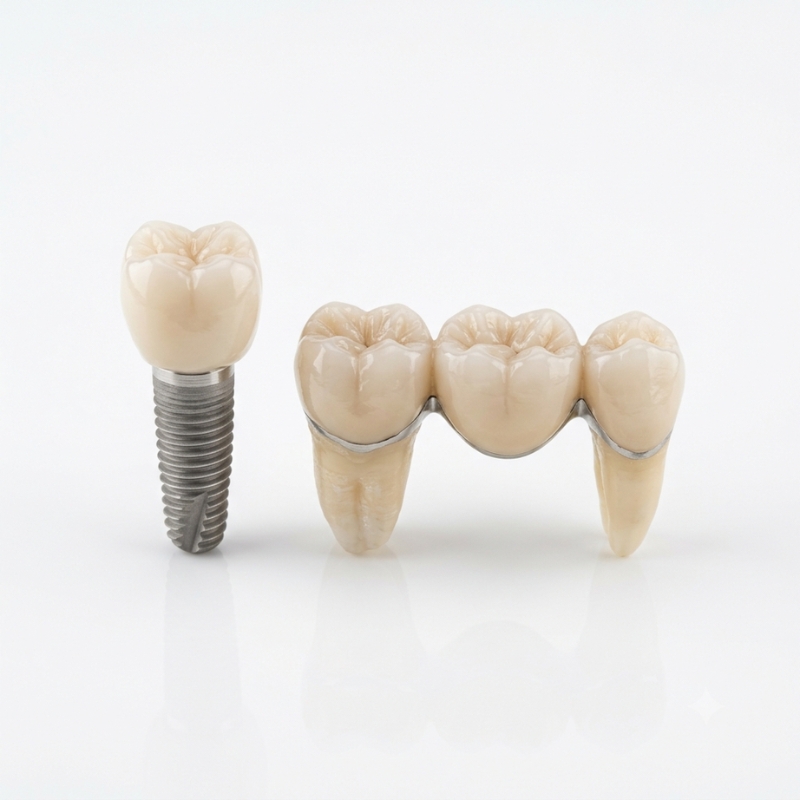
An implant is essentially a replacement root. A titanium or zirconia fixture sits in the jawbone, bonds with it over roughly three to six months, and supports a single custom crown. The fixture stands on its own, so the adjacent teeth stay untouched. And because the bone gets loaded every time you chew, the shrinkage slows considerably. What people tend to overlook is that independence works as a kind of insurance policy. If the tooth next door develops decay five years down the track, it can be treated without anyone dismantling the implant.
Surgical time for a straightforward single-tooth site, in a healthy non-smoking adult, runs to something like 45 to 60 minutes. Same-day provisional crowns are increasingly common now that in-house scanners are standard kit. The definitive porcelain crown still waits until integration is confirmed, though.
Where a Bridge Fits In
A conventional bridge leans on the teeth either side of the gap. They get trimmed down into stumps that accept crowns, and a suspended “pontic” tooth fills the space between. No surgery. No healing delay. The final bridge often lands inside two visits. For patients on certain blood-thinning medications, or anyone with a health condition that slows bone healing, avoiding surgery altogether can feel like the safer road.
The trade-off is structural. Those anchor teeth are now carrying extra load, which makes them likelier to fracture, or to develop decay underneath their crowns, as the years go by. Conventional bridges commonly need replacing somewhere around the ten to fifteen year mark, although meticulous hygiene can stretch that out.
Comparing Procedure and Healing
|
Feature |
Implant |
Bridge |
| Surgery | Minor oral surgery under local anaesthetic; swelling 2 to 3 days | None |
| Treatment time | 3 to 6 months including integration | 2 to 3 weeks |
| Impact on neighbour teeth | Nil | Requires extensive trimming |
| Bone preservation | High. Normal chewing load stimulates bone | Low. Bone slowly resorbs |
| Smoking compromise | Significant. Raises failure risk | Minimal |
Most patients fix on the timeline column and underestimate the recovery. Implant swelling is usually mild, but you’ll be chewing on the opposite side for a fortnight and sticking to softer textures. Bridge patients walk out chewing normally once the anaesthetic fades, which makes it attractive when there’s a wedding or a big work event on the horizon.
Midway through treatment, most people start wondering about food. For an in-depth menu plan, the practice’s post-op dietary notes in the article on what foods you can eat after dental implant surgery set out soft but nutritious options that won’t stress the site.
Ongoing Maintenance Demands
Daily care differs more than most people expect.
Implant crowns sit separately from the neighbouring teeth, so floss threads easily on both sides. Purpose-made implant floss has a stiffened tip that glides under the gum collar, plus a spongy mid-section that wipes the plaque away. An oral irrigator helps, but nobody is insisting on one.
A bridge is a different job. It traps food under the pontic, so super-floss or an interdental brush has to thread through every night. Let that slide and plaque builds up around the anchor teeth, which is precisely where decay likes to take hold. Hygienists also spend longer debriding bridges, because the cement lines sit beneath the gum margin.
Professional maintenance splits along much the same lines. Implants get periodic radiographic review, usually an intraoral periapical X-ray, to confirm the bone levels around the fixture are holding steady. One thing worth knowing here: a 3-D cone beam scan is not part of routine review for a healthy implant. Published radiology guidance advises against using CBCT for periodic checks of implants that have no symptoms, and reserves it for specific problems such as altered sensation or a suspected complication. Bridges need no imaging of that kind, but if decay does creep in underneath, the root canal and remake bills climb quickly.
Long-Term Costs and Value
Upfront, a single implant in Melbourne typically starts at a little above $5,000, depending on grafting, the provisional crown and which final ceramic you settle on. A three-unit porcelain bridge often runs 15 to 20 percent under that. The gap narrows once you factor lifespan in, though, because when a bridge fails, all three units need replacing. At current fabrication costs, that second bridge can end up exceeding what the original implant course would have cost you.
Insurance rebates don’t strongly favour either option. Some of the major dental extras do allocate a separate pool for implants that resets each calendar year, so reading the small print before you lodge for pre-approval saves a few surprises.
Deciding Factors for Melbourne Patients
Bone volume, gum health and lifestyle all colour the decision. So does the state of the teeth either side of the gap, and that one matters more than most patients realise. If the neighbours are already heavily filled or crowned, trimming them for a bridge costs you very little. If they’re pristine, you’re grinding down two healthy teeth to solve a problem with a third, and plenty of people baulk once they see it framed that way. Smoking is the other big one, since it measurably raises the risk of implant failure.
Melbourne’s coffee culture drives staining, too. Ceramic holds its colour well over the years. Composite, which turns up in some provisional and lower-cost restorations, picks up stain rather more readily.
Suburb travel time is worth a thought as well. Patients commuting in from Geelong or the Mornington Peninsula sometimes lean toward bridges purely to avoid the run of integration checks, while inner-city residents can duck in for a 20-minute review without burning annual leave.
Health authority guidance supports informed decision-making. The Australian Health Practitioner Regulation Agency (AHPRA) regulates registered dental practitioners in Australia, helping ensure they meet professional standards. Before proceeding with dental implants, patients should discuss the benefits, risks, alternatives and ongoing maintenance requirements with their treating dentist.
Quick Care Checklist
- Book a professional clean every six months, whichever restoration you have.
- Replace frayed interdental brushes monthly. Worn bristles stop removing plaque properly.
- Go easy on crunchy kernels and olive pits. Both restorations crack under point loads.
- Review your insurance annual limits. Extras rarely cover accidental damage repairs in full.
- Tell your dentist before a long overseas trip, so small issues get fixed while the parts are still sourced locally.
Patients who weigh these day-to-day realities against the surgical nerves usually land on the right solution. Bring a written list of your priorities: appearance, longevity, medical history, budget. It keeps the consultation focused. A Melbourne clinic will walk you through the evidence, but the final call sits with the person who brushes the teeth every night.