
Knowing what each stage of healing should feel like takes a lot of the worry out of getting a dental implant. Once you can see the dental implant recovery timeline laid out from the first day through to the permanent crown, the small aches and quiet weeks stop being a source of doubt and start making sense as part of a normal process. This guide walks you through recovery stage by stage, from the first 24 hours to full healing over several months, so you know roughly what to expect and when. One thing to hold in mind as you read: these are typical patterns, not a fixed schedule. Everyone heals at their own pace, and your dentist’s advice for your situation always comes first.
The First 24 Hours
The first day is about protecting the area and letting it settle. Some bleeding or oozing is normal in the first few hours, and biting gently on the gauze your dentist provides helps it settle. You will likely be a little numb at first as any anaesthetic wears off, so take care with hot drinks until normal feeling returns.
Rest is the main job today. Keep your head slightly elevated, avoid strenuous activity, and do not poke at the area with your tongue or finger however tempting it is to check it. Stick to cool, soft foods and cool drinks, and avoid anything hot, as heat can encourage bleeding early on. If you have been given pain relief or other instructions, follow them as directed. Understanding how the implant has been placed can make these early precautions make more sense, and our page on dental implants explains what has actually happened beneath the gum during the procedure.
Days 2 to 7: Swelling and Soft Food
Swelling usually peaks around two to three days after the procedure rather than on the day itself, so do not be alarmed if your face looks puffier on day three than it did at the start. This is a normal part of healing and it settles over the following days. A cold pack against the cheek in the first couple of days can help keep it comfortable. Some bruising is also normal for some people.
Food through this week stays soft. Think along the lines of soups that are not too hot, yoghurt, scrambled egg, mashed vegetables and other things that need little chewing, and keep them away from the implant side where you can. Keep the mouth clean gently, following whatever rinsing instructions your dentist has given, and avoid vigorous swishing that could disturb the site. Smoking is best avoided entirely through this period because it works against the healing you are trying to support. By the end of the first week, most people are feeling noticeably more themselves.
Weeks 2 to 4: Returning to Normal
This is the stretch where daily life largely goes back to normal. The initial swelling and tenderness have usually settled, the gum tissue is knitting together over the site, and most people are comfortable enough to stop thinking about it constantly. You will generally be easing back towards a more normal diet across these weeks, though it is sensible to keep being a little careful around the implant itself and to introduce firmer foods gradually rather than all at once.
Your normal cleaning routine resumes, with gentle attention around the healing site. If a review appointment falls in this window, it is a good chance to check that the gum is healing as expected. It is worth remembering that feeling back to normal on the surface does not mean the deeper healing is finished. The gum settles well before the bone has done its slower work underneath, which is what the next stage is all about.
Months 2 to 6: Osseointegration
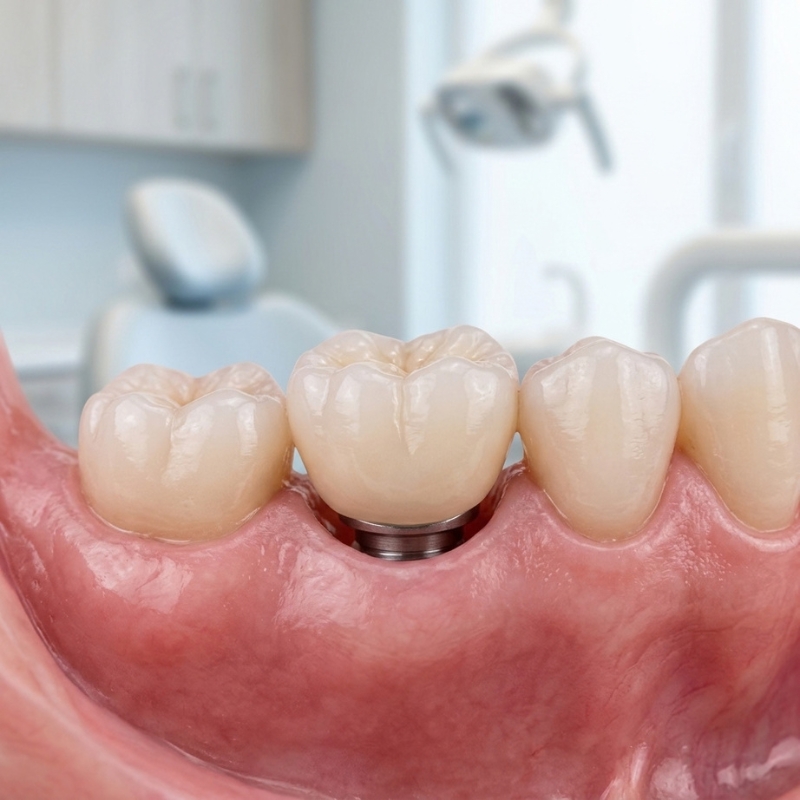
This is the quiet, important part of the process, and it happens out of sight. Osseointegration is the name for the implant post fusing with your jawbone, the bone gradually growing around and bonding to the titanium so that the post becomes a solid, stable foundation. It is what makes an implant work, and it cannot be rushed. It simply takes the time it takes, commonly somewhere across these months depending on your own healing and your dentist’s assessment.
The good news is that there is little for you to do during this stage except carry on as normal and look after your mouth well. You will usually have a temporary arrangement in place while this happens, and your dentist will monitor progress at review appointments to confirm the post is integrating properly before moving to the final step. Keeping up good cleaning, eating well and avoiding smoking all quietly support what the bone is doing. It can feel like not much is happening, but this is the stage that determines how solid the finished result will be.
When the Permanent Crown Goes On
Once your dentist is satisfied the post has integrated and the foundation is solid, the final part can be fitted. This is when the permanent crown, the tooth you actually see and chew with, is attached to the implant via the abutment. Compared with everything that has come before, this stage is straightforward, and it is the point at which the implant starts to look and function like a natural tooth.
There may be a short adjustment period as you get used to biting and chewing on the new tooth, and your dentist will check the bite feels right and make small adjustments if needed. From here, the implant moves out of recovery and into ordinary life, where keeping it in good shape is really just a matter of cleaning it well and keeping up your regular dental visits.
What Is Not Normal at Any Stage
Most recoveries run smoothly, but it helps to know which signs warrant a call to your dentist rather than waiting for the next appointment. Get in touch promptly if you notice:
- Bleeding that is heavy or does not settle, rather than minor oozing early on
- Pain that worsens after the first few days instead of gradually easing
- Swelling that keeps increasing beyond the first few days or spreads
- Signs of infection such as discharge, a bad taste or taste that will not clear, or fever
- The implant or temporary feeling loose or moving
- Numbness that persists well beyond when the anaesthetic should have worn off
None of these are reasons to panic, but they are all reasons to make contact. Healing issues are far easier to deal with early, and your dental team would always rather hear from you and reassure you than have you wait and worry.
Questions to Ask at Each Review Appointment
Review appointments are there to track your healing, and they are also your chance to ask whatever is on your mind. Useful things to raise include how your healing is progressing compared with what is expected, when you can return to firmer foods, how the integration is tracking, and roughly when the next stage is likely. Asking what you specifically should watch for before the next visit is always worthwhile too.
The clearest answers will always be the ones tailored to your own mouth, because your healing is yours alone. Our principal dentist Dr Nick Hii is happy to talk through each stage so you understand what is happening and why at every visit. If you are still considering treatment and want the whole journey explained before you begin, the best starting point is to book an implant consultation and have your questions answered in person.