
It is the question almost everyone asks before they commit, and fair enough: you want to know whether this is a once-in-a-lifetime fix or something you will be redoing in a few years. The honest answer is that a well-placed implant can last many years, and for a lot of people it lasts decades. What makes the difference is rarely luck. It comes down to the health of the bone and gums around the implant, how well it is cleaned and maintained, and a handful of habits that either protect it or quietly wear it down. This article walks through what actually determines implant longevity, which parts last longest, and the practical things you can do to get the most out of yours.
What Affects How Long an Implant Lasts
An implant is not a single thing that simply succeeds or fails. Its lifespan is shaped by several factors working together over time. The biggest ones are the health of the bone that holds it, the condition of the gums around it, how thoroughly it is cleaned day to day, and whether it gets regular professional maintenance. Your general health matters too, because conditions that affect healing and circulation also affect the tissues supporting an implant.
The reassuring part is that most of these factors are within your influence. Unlike a natural tooth that can decay, the titanium post itself cannot get a cavity. What it can be affected by is the gum and bone around it, and those respond to care in the same way the rest of your mouth does. If you want to understand how the whole thing is put together before reading on, our page on dental implants explains how they are placed and how the parts fit together.
The Implant, the Abutment and the Crown Age Differently
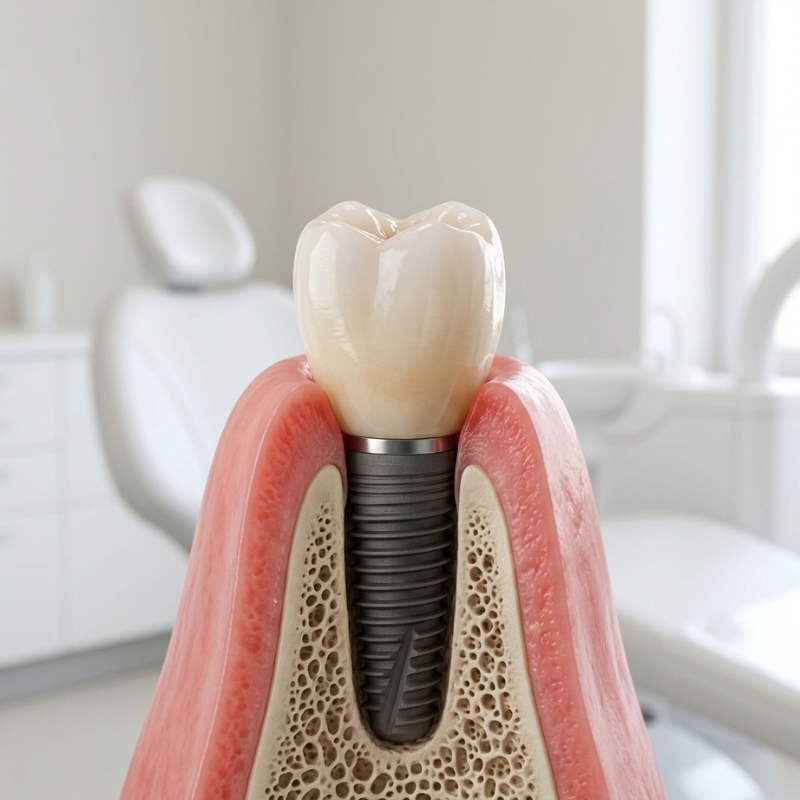
One of the most useful things to understand is that an implant is made of three parts, and they do not all last the same length of time. The implant itself is the titanium post placed into the jawbone. It fuses with the bone over the healing period and, once settled, is the longest-lasting part of the whole structure, often lasting for decades.
The abutment is the connector that sits between the post and the visible tooth. The crown is the part you actually see and chew with, and it is the part most exposed to wear, biting forces and the general work of everyday eating. For that reason the crown is usually the component that needs attention or replacement first, while the post beneath it stays exactly where it is. This is worth knowing because it changes what “lasting” means: needing a new crown years down the track is normal maintenance, not the implant failing. Thinking of the post as the long-term foundation and the crown as a replaceable working surface is a much more accurate picture than imagining the whole thing as one disposable unit.
Bone Health and Gum Health Over Time
An implant is only ever as secure as the bone and gum holding it, which is why these are at the heart of how long it lasts. The post relies on healthy bone gripping it firmly, and it relies on healthy gum tissue sealing around it to keep bacteria out. When those tissues stay healthy, the implant stays stable.
Problems start when the gum around an implant becomes inflamed and infected, much as gum disease affects natural teeth. Left unchecked, that inflammation can begin to affect the bone support beneath, and loss of bone support is one of the main reasons an implant becomes loose over time. This is also why smoking is such a significant factor, because it affects the gums, the blood supply and healing, all of which the implant depends on. Keeping the surrounding tissues healthy is not a side issue, it is the single most important thing for long-term stability, and it is why cleaning and professional monitoring matter so much.
Habits That Shorten Implant Life
Some everyday habits work quietly against an implant, and being aware of them is half the battle. The main ones to watch are:
- Smoking, which affects gum health, blood supply and healing around the implant
- Skipping daily cleaning, which lets bacteria build up where the gum meets the implant
- Grinding or clenching your teeth, which loads the implant and crown far beyond normal chewing
- Using your teeth as tools to open packaging or crack things, which stresses the crown
- Missing regular dental check-ups, so small changes are not picked up early
- Poorly managed health conditions that affect healing and gum health
Grinding deserves a special mention because many people do it in their sleep without realising. The repeated pressure is hard on both the crown and the connection beneath it, and it is a problem worth raising with your dentist if you suspect it, because it is manageable once it is known about.
How to Make an Implant Last Longer
The good news is that looking after an implant is not complicated, and it overlaps almost entirely with looking after the rest of your mouth. Clean it twice a day just as you would a natural tooth, and clean between your teeth and around the implant daily, since the area where the gum meets the implant is exactly where trouble tends to begin.
Keep up your regular professional cleans and check-ups so the gums and bone can be monitored and anything minor can be caught while it is still minor. If you grind your teeth, ask about a nightguard to take the load off while you sleep. If you smoke, reducing or stopping genuinely helps the tissues the implant depends on. And if you have a health condition that affects healing, keeping it well managed supports your implant along with the rest of you. None of these are dramatic steps, but done consistently they are what carry an implant through the long term.
Signs Something Has Changed
An implant that is doing well should feel like a normal part of your mouth and ask nothing of you. So the things to pay attention to are changes. Any looseness or movement in the crown or the implant is worth getting checked promptly. So is persistent discomfort when biting, or gums around the implant that become red, swollen, tender or bleed when you clean.
Gum that is receding around the implant, or a change in how the bite feels, is also worth mentioning. None of these mean the worst has happened, and many are straightforward to address when they are caught early. The important thing is not to wait and hope. Changes around an implant are far easier to manage early than late, so an extra visit when something feels different is always the sensible call.
Talking to Your Dentist About Longevity
The most reliable way to understand what longevity looks like for your situation is a proper conversation with your dentist, because your bone, your gums, your general health and your habits all feed into it. A good consultation covers what you can expect, what maintenance will involve, and how to protect your investment over the years ahead. Our principal dentist Dr Nick Hii takes the time to talk through these questions so you know what you are committing to before anything begins, and what keeping it in good shape will ask of you afterwards.
If you are weighing up treatment and want longevity explained for your own mouth rather than in general terms, the best next step is to book an implant consultation and have your questions answered directly. An implant is a long-term decision, and it is worth starting it well informed.