Dental implant recovery is usually straightforward, but it rarely feels “simple” in the moment. The first week can come with swelling, bruising, strange tightness in the gum, and that nagging question: Is this normal, or is something wrong?
This Melbourne-focused aftercare guide walks you through the healing stages from day one to the months-long bone-bonding phase (osseointegration). You’ll learn what’s typically expected, what’s worth a phone call, and how to look after the area without accidentally slowing healing.
The two types of healing are happening at once
It helps to know what your body is actually doing:
• Soft tissue healing (gum healing): what you can see and feel—swelling, tenderness, stitches, gum comfort.
• Bone healing (osseointegration): what you can’t see—your jawbone gradually bonds to the implant surface. This takes longer.
A common surprise is that your gum can look fine while deeper healing is still underway. That’s normal.
Quick Q&A: Why does it take months if I feel okay after a week?
Because comfort and stability aren’t the same thing. Soft tissue often settles quickly, but bone remodelling and bonding is slower. Your clinician checks readiness before anything is loaded heavily or finalised.
What can change your healing timeline?
Not everyone heals at the same pace. Your recovery can shift depending on:
• Number of implants (one site vs several)
• Extra procedures (extractions, bone grafting, sinus lift)
• Implant location (upper vs lower jaw; front vs back)
• General health (immune health, diabetes control, medications)
• Smoking/vaping and alcohol
• Oral hygiene and plaque levels
• How closely you follow aftercare instructions (diet, cleaning, activity)
If you’re the type who likes to understand the “why” behind different plans and healing times, it can be useful context reading about choosing an implantologist for dental implants, so you know what questions to ask and what a good aftercare plan usually covers.
Stage 1: The first 24 hours (day of surgery)
This is the “protect the site” phase. Your priorities are controlling bleeding, limiting swelling, and keeping the area undisturbed.
What’s normal in the first 24 hours
• Oozing or light bleeding: pink saliva is common early on.
• Soreness building as numbness fades: often a gradual ramp-up.
• Swelling starts: it often gets worse before it gets better.
• A tight or “stretched” feeling: cheeks and gums can feel firm.
• Mild nausea: sometimes from anaesthetic, stress, or swallowing blood.
• Fatigue: your body is shifting into healing mode.
What to do on day 0
• Rest: plan a quiet day.
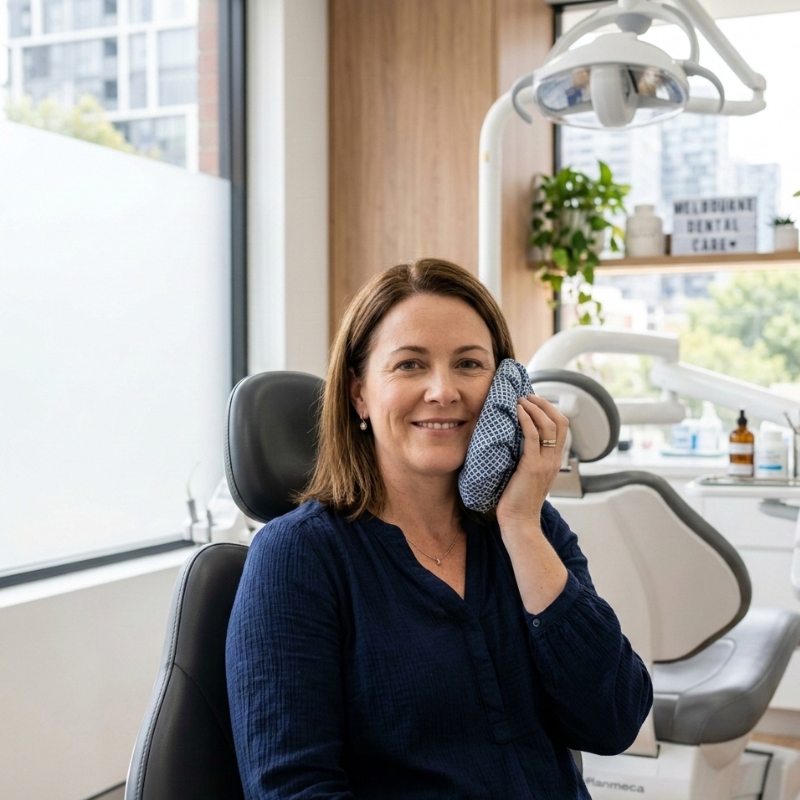
• Cold packs (if advised): short intervals can help reduce early swelling.
• Stick with cool or lukewarm soft foods: yoghurt, smoothies (no straw), mashed veg, scrambled eggs.
• Hydrate: small, frequent sips.
• Avoid straws and vigorous rinsing: suction and force can disturb the clot.
• Skip exercise: even a “quick gym session” can increase bleeding and swelling.
What’s not normal (call the clinic)
• Bleeding that won’t slow down after following pressure instructions
• Rapidly growing swelling (especially if swallowing/breathing feels affected)
• Severe pain that isn’t helped at all by clinician-approved pain relief
• Any signs of an allergic reaction (hives, wheeze, lip/tongue swelling)
Day 0 Q&A: Can I have coffee after implant surgery?
Many Melbourne locals ask this immediately. Hot drinks can increase bleeding early on, so it’s generally safer to avoid very hot coffee on the day of surgery. If you do have coffee, keep it lukewarm and avoid sipping continuously if it makes you clench or irritates the area.
Stage 2: Days 2–3 (peak swelling and bruising)
Days 2 and 3 are often the most uncomfortable. A lot of people worry that something is wrong simply because this is when swelling tends to peak.
What’s normal on days 2–3
• Swelling peaks: cheeks can look noticeably puffy.
• Bruising appears or spreads: colours often shift over the week.
• Soreness increases: especially with talking a lot or chewing.
• Jaw stiffness: opening wide may feel difficult.
• Occasional pink saliva: a small amount can still occur.
What helps on days 2–3
• Choose “no-chew” or minimal-chew meals: soups (not hot), soft pasta, soft fish, mince-based meals, oats.
• Keep your head slightly elevated at night: can reduce throbbing.
• Light movement is fine: gentle walking can help, but keep exertion low.
• Stay on top of timing: don’t wait until discomfort is intense before using clinician-approved pain relief.
What’s not normal (call the clinic)
• Swelling that keeps getting worse after day 3 instead of starting to settle
• Fever or chills
• A bad taste plus discharge (pus)
• Pain that sharply escalates rather than gradually easing
• A hot, increasingly tender lump on one side
Days 2–3 Q&A: Why does bruising look worse today than yesterday?
Bruising often becomes more visible after 24–48 hours. It can travel downward and change colour (purple → green/yellow) as it resolves.
Stage 3: Days 4–7 (you start turning the corner)
This is the phase where many people feel noticeably better, even if things still look a bit messy.
What’s normal in days 4–7
• Swelling starts to reduce
• Bruising begins to fade (colour shifts are expected)
• Pain becomes more manageable and less constant
• Gums can look uneven: swelling reduces at different speeds
• Mild itchiness or tightness: a healing sign for some
• Stitches loosen/dissolve: depending on the type used
How to clean safely without disturbing healing
Your goal is clean enough to prevent irritation, but gentle enough to avoid trauma.
• Brush the rest of your teeth normally.
• Around the surgical site, follow your clinician’s instructions closely.
• Don’t “check” the site by poking with your finger or pressing hard with your tongue.
• If a rinse is prescribed, use it exactly as directed.
Once first-week soreness settles, consistency matters more than intensity—this practical guide to dental implant care and maintenance explains daily habits that protect the gumline while your implant continues healing beneath the surface.
What’s not normal in days 4–7 (call the clinic)
• Pain that worsens after initial improvement
• A persistent bad taste or smell
• Gum swelling that becomes more localised and “pimple-like”
• Bite changes that suddenly feel significant (especially with a temporary tooth)
Days 4–7 Q&A: Is it normal to feel a small lump near the site?
Some firmness can be normal as tissue remodels. A rapidly growing, hot, very tender lump is not something to ignore—call and describe what you’re noticing.
Stage 4: Weeks 2–3 (surface looks good, deeper healing continues)
By this point, the area can look calm—sometimes calm enough that people forget the implant is still in a sensitive healing stage underneath.
What’s normal in weeks 2–3
• Most swelling is gone
• Gum tenderness is greatly reduced
• Chewing feels more normal (with sensible food choices)
• Occasional brief twinges can happen
• Neighbouring teeth may feel slightly sensitive temporarily
What to keep doing
• Keep cleaning consistently—plaque control is one of the biggest long-term protectors.
• Be careful with crunchy textures and “first bite” pressure.
• Avoid testing the area with your tongue.
What’s not normal in weeks 2–3 (call the clinic)
• Swelling returns after disappearing
• Bleeding restarts without explanation
• Sharp, persistent pain when biting
• Any sensation of movement or instability
Weeks 2–3 Q&A: Can I eat normally now?
Many people can return to most foods by this stage, but “normally” depends on where the implant is and whether you’re biting directly on it. If you were told to chew away from the site, stick with that until cleared.
Stage 5: Weeks 4–6 (routine returns, but don’t drop the basics)
This is the “I feel fine” phase—often the riskiest time for slipping back into habits that irritate the site.
What’s normal in weeks 4–6
• Little to no daily discomfort
• Gums look settled
• Workdays, commuting, and socialising feel normal again
Common mistakes in this stage
• Resuming smoking/vaping “just occasionally”
• Skipping cleaning near the gumline because everything feels fine
• Returning to hard foods too quickly (nuts, crusty bread, popcorn)
• Missing follow-ups because symptoms have gone
And if you’re comparing providers or planning your next steps, looking for a trusted implantologist in Melbourne can make a real difference in how clearly aftercare is explained and how confidently healing is monitored over time.
What’s not normal in weeks 4–6 (call the clinic)
• Bleeding around the implant area that doesn’t improve with careful cleaning
• Puffy, inflamed gumline that seems to worsen
• Ongoing tenderness that doesn’t trend down
• Any sense of looseness
Weeks 4–6 Q&A: Why do my gums still look slightly uneven?
Minor contour differences can be normal early on. The key is the trend—if you see increasing redness, swelling, bleeding, or pain, it’s worth a review.
Stage 6: Months 2–6 (osseointegration and longer-term stability)
This stage is usually quiet from a day-to-day perspective, but it’s when the deeper bonding process matters most.
What’s normal in months 2–6
- You may have no symptoms at all
• The implant is bonding with bone (osseointegration)
• Your clinician assesses stability before the final restoration is placed or fully loaded (timing varies)
What’s not normal in months 2–6 (call the clinic)
- Bleeding when cleaning around the implant
• Bad taste, discharge, or recurring gum swelling
• New pain on chewing that wasn’t there before
• Bite changes that develop over time
Months 2–6 Q&A: If my gum looks perfect, is the implant fully healed?
Not necessarily. Gum healing can look complete while bone bonding is still progressing. That’s why stability checks and follow-ups matter even when you feel fine.
Normal vs not normal: a practical symptom guide
A helpful way to assess healing is to focus on patterns.
Usually normal patterns
• Swelling that peaks around days 2–3, then gradually reduces
• Pain that slowly improves day by day
• Bruising that changes colour and fades over 1–2 weeks
• Mild tenderness near the site that improves with time
• Tightness that eases as swelling settles
Red-flag patterns
• Pain that worsens after it has started improving
• Swelling that keeps increasing after day 3
• Fever, chills, or feeling unwell overall
• Bad taste/smell with discharge
• Any feeling that something is moving
• Gumline inflammation that worsens and bleeds easily despite good cleaning
If you’re ever unsure, it’s reasonable to call and describe what you’re experiencing—small issues are often easiest to manage early.
Eating after implant surgery: a sensible texture timeline
Everyone’s instructions differ, but this staged approach works for many people.
Days 0–3: cool and very soft
• Yoghurt, custard, smoothies (no straw), mashed veg, soft pasta, scrambled eggs
• Avoid: hot foods, crunchy foods, spicy foods if they sting
Days 4–7: soft but more filling
• Risotto, soft fish, mince dishes, well-cooked veg, oats
• Avoid: nuts, crackers, crusty bread, biting directly on the site
Weeks 2–6: gradual return to normal texture
• Reintroduce firmer foods carefully
• Take care with: steak, toasted bread, popcorn, hard lollies
Cleaning: the goal is “clean enough” without trauma
Think of cleaning in phases:
• Early phase: protect the clot and avoid disturbing the wound
• Mid phase: build consistent brushing habits around the area
• Later phase: optimise technique to keep the gumline healthy long-term
For a reputable overview of dental implants and general care considerations, the Australian Dental Association’s patient information is a solid reference: Australian Dental Association dental implant information.
FAQ
How long does swelling last after dental implant surgery?
Swelling often builds in the first two days, commonly peaking around days 2–3, then gradually settling. Mild residual puffiness can take longer to fully resolve, especially if multiple sites were treated.
Is bruising on my jaw or neck normal?
Bruising can track downwards and change colour as it resolves. If bruising is rapidly expanding or paired with worsening swelling and significant pain, call your clinic.
Why do I still feel tenderness weeks later?
Mild tenderness can persist as tissues remodel, particularly if you’ve started chewing firmer foods. It should trend toward improvement. Worsening tenderness or new swelling is worth checking.
Can I brush normally after an implant?
You can usually brush the rest of your mouth as usual, but the surgical site often requires a gentler approach early on. Follow your clinician’s specific guidance for that area.
What are the early signs of infection?
Increasing pain, swelling that doesn’t start to settle after the expected peak, fever, discharge, and a persistent bad taste/smell are common warning signs. Contact your clinic if these appear.
What if I accidentally chewed on the implant side?
One accidental bite often isn’t catastrophic, but if it triggers sharp pain, bleeding that restarts, or soreness that doesn’t settle, call for advice and avoid repeating it.
When can I return to the gym?
Light activity is often easier to resume earlier than heavy lifting or high-intensity exercise. If exercise increases throbbing, swelling, or bleeding, scale back and check in with your clinician.
How do I know if the implant is loose?
Looseness is often described as a shifting sensation or feeling that something moves. If you suspect mobility, don’t keep pressing it—call your clinic.