

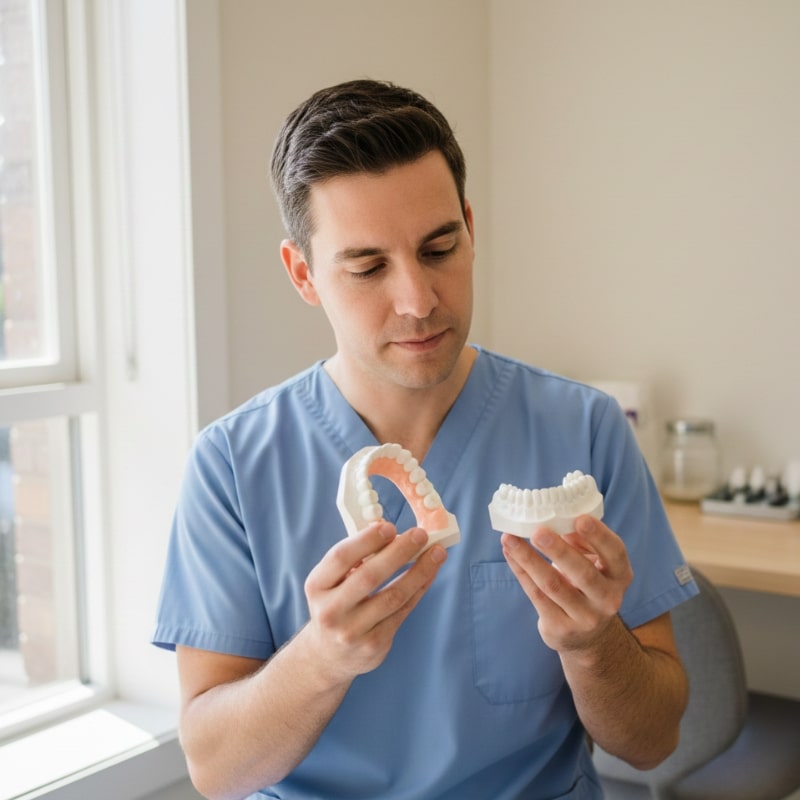
Replacing missing teeth isn’t just a dental decision. It’s a day-to-day decision.
It shows up when you’re grabbing lunch in the CBD, meeting friends for dinner, speaking in a long meeting, or simply wanting to eat without overthinking every bite. If you’re weighing dentures versus fixed teeth, the best choice usually comes down to four practical questions:
- How comfortable will it feel?
- How stable will it be when eating and speaking?
- How long will it last in real life?
- What will it cost over time (not just upfront)?
This guide is designed to help Melbourne patients make sense of those trade-offs without turning into a sales pitch.
What counts as “dentures” and what counts as “fixed teeth”?
Dentures are removable. They may be:
- Full dentures (replace all teeth on the top or bottom)
- Partial dentures (replace some teeth and attach to the remaining teeth)
- Immediate dentures (placed soon after extractions, then adjusted as healing changes the fit)
When people say “fixed teeth”, they usually mean teeth designed to stay in place rather than being taken out daily. There are different ways that can be achieved depending on your mouth, health, and goals. If you want a simple example of what “fixed” can mean for some full-arch cases, you can explore TeethXpress implants to get a feel for the concept and typical questions people ask.
Start with your priorities (this makes the decision much easier)
Most people don’t start with materials or technical details. They start with a frustration or fear:
- “I don’t want anything to move.”
- “I need to speak clearly for work.”
- “I can’t keep paying for fixes.”
- “I want something I can live with, not just tolerate.”
Pick your top two priorities:
- Best stability for eating and speaking
- Best comfort against the gums
- Lowest upfront cost
- Lowest long-term hassle
- Longest lifespan before major replacement
- A cleaning routine you’ll actually stick to
Once you’ve chosen your top two, the comparison below will feel a lot clearer.
Comfort: what it feels like in real life
Comfort isn’t just pain. It’s also how often you’re aware of your teeth throughout the day.
Denture comfort
Dentures sit on gum tissue. Comfort depends heavily on fit, bite balance, saliva, and your mouth’s shape and muscle control. Many people adapt well, but it’s common to experience:
- Sore spots during the early weeks
- A “full mouth” feeling while you adjust
- Occasional rubbing of your gums and ridge changes over time
- Annoyance when food sneaks underneath
Lower dentures are often harder to keep comfortable because the tongue and smaller surface area can make movement more likely.
Fixed teeth comfort
Because fixed teeth are designed to stay put, many people describe them as “less to think about” day-to-day. Comfort often improves when you remove the movement factor that can create rubbing or pressure points.
That said, comfort still depends on gum health, bite forces (especially clenching/grinding), and how well you can keep everything clean.
Q&A: Will dentures always feel bulky?
Not always. Bulkiness is often most noticeable early, then improves as you adapt and as adjustments refine the fit. If it still feels bulky long-term, it may mean the design or fit needs review, or that your mouth simply isn’t tolerating the coverage required for stability.
Stability: eating, speaking, and social confidence
Stability matters because it affects confidence. Eating at home is one thing. Eating out, laughing, and speaking for hours without worry is another.
Dentures and stability
Some people get excellent stability, especially with upper dentures and good suction. But stability can be challenged by:
- The lower jaw (tongue movement + less suction)
- Changes in your ridge over time (the “foundation” shifts)
- Hard, sticky, or very chewy foods
- Long periods of talking (muscle patterns matter)
Many denture wearers cope by:
- Taking smaller bites and chewing evenly
- Choosing “safe” foods when out
- Using adhesives (helpful for some, annoying for others)
Fixed teeth and stability
If your number one goal is stability, fixed teeth are often what people are thinking of when they say “I want something that feels secure.” That can mean:
- More confidence biting with the front teeth
- Less worry about movement during speech
- Less “management” in social eating situations
If that’s the kind of stability you’re chasing, it can help to learn about different fixed teeth options so you understand what’s realistic, what maintenance looks like, and what questions to ask during an assessment.
Q&A: Can you eat normally with dentures?
Some people do, particularly after adapting and having adjustments. But “normal” often means learning techniques and accepting certain limits (very hard, sticky, or chewy foods can stay challenging). If you know you don’t want food limitations, stability should carry more weight in your decision.
Lifespan: what lasts, what changes, and what gets replaced
A helpful way to think about lifespan is:
- How long can the teeth/appliance last
- How long does the fit remain comfortable
- How often sis ignificant maintenance needed
Denture lifespan
Dentures can last for years, but they frequently need maintenance because gums and jawbone change over time. That can mean:
- Adjustments for sore spots
- Relines to restore fit as your ridge changes
- Repairs if cracks or chips occur
- Replacement when wear, fit, or aesthetics no longer suit
A plain-language overview of denture care and considerations is available via the Victorian government-backed Better Health Channel’s dentures guide.
Fixed teeth lifespan
Fixed teeth can also last a long time, but they still require:
- Consistent daily cleaning (often with specific tools)
- Regular professional reviews
- Maintenance/repairs if wear or damage occurs (especially with grinding)
In other words, “fixed” doesn’t mean “set and forget.” It means a different maintenance style.
Q&A: What tends to wear out first?
With dentures, changing fit over time often drives relines or remakes. With fixed teeth, long-term wear and the need for professional maintenance are common themes. Either way, skipping check-ups usually shortens lifespan.
Costs: upfront cost vs long-term cost (what people forget)
Costs are personal and vary widely. Instead of chasing a single number, it helps to compare categories.
Dentures: costs to budget for
Dentures are often more accessible upfront. Over time, costs can include:
- Adjustments (especially early)
- Relines as fit changes
- Repairs
- Adhesives and cleaning products
- Replacement cycles
Also consider the “time cost”: appointments, repairs, and the mental load of managing looseness or food getting underneath.
Fixed teeth: costs to budget for
Fixed teeth often come with higher upfront costs. Ongoing costs can include:
- Maintenance visits and professional cleaning support
- Repairs if something chips/loosens
- Bite protection if you grind (as advised)
- Cleaning tools and supplies
For many people, the trade-off is reduced day-to-day management compared with removable appliances.
A practical way to compare costs
Ask yourself:
- Over the next 10 years, how often might I need significant maintenance or replacement?
- How much do I value stability and confidence in public?
- How much ongoing “admin” am I willing to do?
This is why two people can look at the same options and choose differently — both rationally.
Q&A: Are dentures always cheaper long-term?
Not always. They’re often cheaper upfront, but frequent relines, repairs, remakes, or dissatisfaction that leads to changing pathways later can add up. Long-term value is about fit, tolerance, and expectations — not just the first invoice.
Melbourne-style scenarios: which option tends to suit who?
These are practical patterns, not medical advice — but they may help you recognise yourself.
Scenario 1: “I want the lowest upfront cost, and I’m okay with removable”
Dentures may suit if:
- You’re comfortable removing them daily
- You can adapt to a learning curve
- You don’t mind some food limitations
Watch-outs: ongoing relines/repairs and lower-denture stability can frustrate people who eat out often.
Scenario 2: “I’m in meetings all day and can’t risk speech or movement issues”
Fixed teeth may suit if:
- Speech confidence matters for work
- You want stability during long days
- You don’t want to rely on adhesives
Watch-outs: you must be willing to clean thoroughly and keep up with reviews.
Scenario 3: “My lower denture has never felt stable”
If the lower denture is your main struggle, your priority might be stability. In that case, learning about full-arch tooth replacement concepts can help you ask better questions about what’s possible and what maintenance involves.
Watch-outs: suitability varies, and maintenance is still part of the deal.
Scenario 4: “I’ve just had teeth removed and everything’s changing”
When extractions are recent, your mouth is changing as it heals. Some people use dentures as a transition during this period. Whatever you choose, plan for adjustments and reviews while healing stabilises.
Red flags that mean “get it checked”
Whichever path you’re on, don’t ignore:
- Persistent ulcers or sore spots
- Sudden looseness or rocking
- Pain when chewing
- Cracks, chips, sharp edges
- Bleeding, swelling, or an ongoing bad taste
- Bite changes you can’t explain
Early fixes are usually simpler than months of coping.
FAQs
Do dentures change your face over time?
They can, particularly if fit changes and support is reduced. Regular reviews help keep comfort and facial support on track.
Can fixed teeth look natural?
They can, when designed to suit your face, smile line, and bite. Natural results depend on planning and maintenance.
Is gagging with dentures normal?
Some people gag initially, especially with upper dentures. It often improves with adjustments and adaptation, but persistent gagging should be reviewed.
Can I start with dentures and switch later?
Many people reassess over time. The key is to plan with a clinician so your current choice doesn’t limit future options unnecessarily.