If you’re missing most of your teeth (or living with failing ones), the decision isn’t just clinical — it’s personal. It affects what you eat, how you speak, how you socialise, and how confident you feel. In Melbourne, where life often revolves around coffee, dining out, work commutes, and weekend plans, the “best” full-mouth solution is usually the one that fits your lifestyle as much as your mouth.
This guide breaks down the main full-mouth teeth replacement options, who tends to suit each pathway, and what recovery can realistically look like.
The main full-mouth options (what “full-mouth” actually means)
“Full-mouth” can mean:
• Replacing all teeth in one jaw (upper or lower)
• Replacing teeth in both jaws
• Replacing remaining teeth that can’t be saved (due to decay, gum disease, fractures, or advanced wear)
Most solutions fall into two buckets:
• Removable options (you take them out to clean)
• Fixed options (they stay in place, more like natural teeth)
Common pathways include:
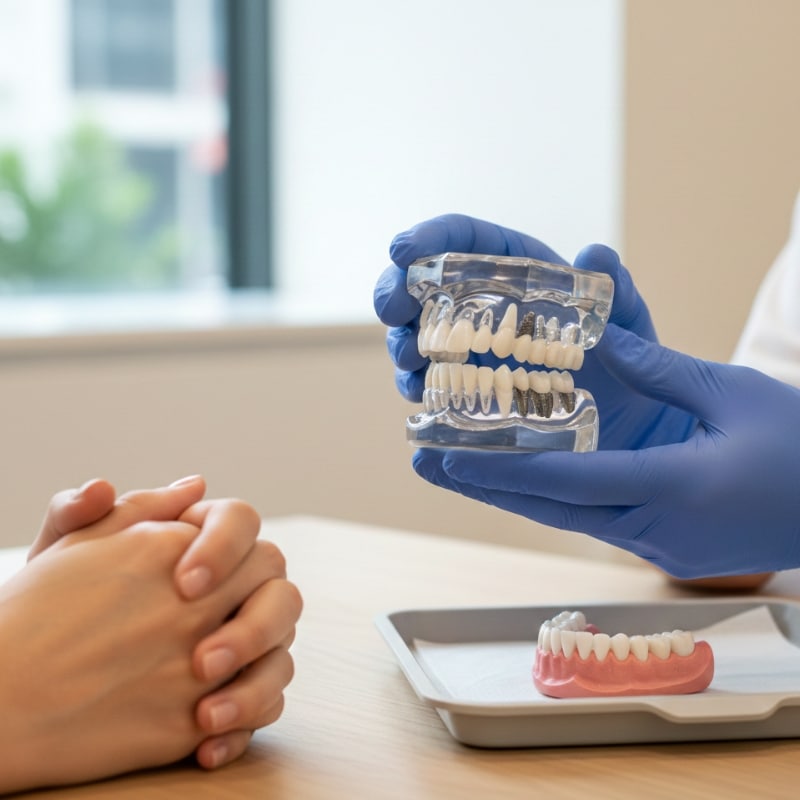
• Conventional full dentures
• Implant-supported removable dentures (implant-retained overdentures)
• Fixed full-arch implant bridges (often referred to by terms like “All-on-4” or “All-on-6”, depending on the design)
A helpful starting point is deciding whether you want removable teeth or fixed teeth — then checking what you qualify for.
Fixed vs removable: what it’s like day to day
Conventional dentures (removable)
Conventional dentures sit on the gums and rely on suction (upper) and fit/stability (lower).
Many people experience:
• A learning curve for speech, especially early on
• Food limitations (hard, sticky, or very chewy foods can be difficult)
• Movement, particularly with lower dentures
• Relines/adjustments over time as gums and bone change
Some people do very well with dentures — but if stability is your biggest frustration, it’s worth comparing implant-supported options.
Implant-supported removable dentures (removable, but anchored)
These are still removable, but they clip onto implants for improved retention.
Often suits people who:
• Want better stability than conventional dentures (especially lower)
• Prefer removing teeth to clean
• Want an “upgrade” in function without committing to a fixed bridge
Typical benefits:
• Less movement and fewer sore spots once optimised
• Improved confidence for eating and speaking
Limitations:
• Still removable
• Attachments need maintenance
• Daily cleaning still matters (and can’t be skipped)
Fixed full-arch implant bridges (fixed)
These are bridges secured to implants, designed to stay in place. The number of implants, design, and sequence (temporary vs final teeth) varies case by case.
People often choose fixed teeth because they want:
• A more “teeth-like” feel day to day
• Improved stability compared with dentures
• Less worry about movement while eating or talking
If you’re comparing fixed solutions, it can help to understand the range of full-arch implant options before you decide what questions to ask.
All-on-4 vs All-on-6 vs other full-arch designs (what changes?)
You’ll see “All-on-4” used as a shorthand, but what matters most is how the plan fits your bone, bite, and risk factors.
All-on-4 (common full-arch concept)
- Often uses four implants to support a full arch
- May include angled implants in selected cases to use available bone
- Sometimes paired with a temporary bridge early on (for the right patient)
Why people consider it:
• Fewer implants than some designs
• Can be planned to work within certain bone limitations
All-on-6 (common full-arch concept)
- Uses more implants (often six) for the arch
- Can distribute forces across more support points
Why people consider it:
• Potentially more load distribution, helpful for some bite patterns
• May be preferred depending on bone quality, arch shape, and planning goals
Other fixed full-arch approaches
Some cases use different layouts, staged healing, or additional steps if gum health or bone stability needs attention first.
Key truth to keep in mind: implant number alone doesn’t guarantee a better outcome — the plan, bite management, hygiene access, and follow-up care matter just as much.
Q&A: Is All-on-4 always better than dentures?
Not always. Dentures can be appropriate for some people — especially when medical factors, hygiene capacity, or expectations make surgery or fixed teeth less suitable. But if your priority is stability and confidence (particularly for eating), implant-supported options often provide a noticeably different day-to-day experience for many patients.
Who qualifies (and who might need prep first)
Candidacy isn’t just “do you have enough bone?” It’s a blend of oral health, general health, habits, and goals.
You may be a strong candidate for fixed full-arch implants if:
- Gum disease is controlled (or can be stabilised)
- Bone volume/quality is suitable (or there’s a clear plan around it)
- You can commit to cleaning and follow-up
- You don’t smoke, or you’re willing to stop (especially around surgery)
- Medical conditions are stable (for example, diabetes is well managed). Expectations are realistic (function and confidence improve, but healing still takes time)
You may still qualify, but need extra planning if:
- You have significant bone loss
- You grind or clench (bridge design/materials and protective strategies matter)
- You’ve worn dentures for years, and your jaw shape has changed
- Your bite is comple,x or you have jaw joint symptoms
- You have a history of gum disease and need closer monitoring
Reasons a clinician might delay implants (temporary) or advise against them (case dependent)
- Active, uncontrolled gum infection
- Heavy smoking with no plan to change
- Uncontrolled medical conditions that increase surgical risk
- Inability to maintain hygiene or attend follow-ups
- Some medications/conditions that require coordination with your GP/specialist
This isn’t a “yes/no” judgement — it’s risk management. Many people can still be treated safely once risks are reduced or stabilised.
Q&A: I’ve been told I have bone loss — does that mean dentures are my only option?
Not necessarily. Bone loss changes the planning, but it doesn’t automatically eliminate implant pathways. The key is a proper assessment and a plan that explains trade-offs clearly.
Recovery: what it usually looks like (realistic, not scary)
Recovery varies depending on:
• Whether teeth were removed at the same time
• Whether temporary teeth were fitted early
• Your general health, sleep, stress, and habits (smoking matters)
• Surgical complexity and how much adjustment was required
If you’re trying to plan time off work and home support, a simple guide to a full-mouth implant recovery timeline can help you map out the typical phases.
Days 1–3: peak swelling window
Common experiences:
• Swelling that often peaks around day 2–3
• Bruising (sometimes extending into the neck)
• Achiness/pressure and tightness
• Fatigue and disrupted sleep
• Speech changes (especially if you have temporary teeth)
What helps:
• Soft foods you’ll actually eat (soups, yoghurt, smoothies, scrambled eggs)
• Hydration and gentle movement (short walks)
• Avoid “testing” bite strength, even if you feel okay
Days 4–7: improving, but still delicate
Many people notice:
• Swelling starts to reduce
• Discomfort becomes more manageable
• Speech and confidence begin to settle
This is when people often do too much too soon — especially if you’re busy and trying to get back to normal life quickly.
Weeks 2–6: function improves, hygiene becomes the job
You may be:
• Expanding foods gradually (still avoiding very hard/chewy items if advised)
• Learning cleaning routines around implants/bridges
• Attending follow-ups for checks and minor adjustments
If you have temporary teeth, remember: they’re designed to protect healing — not to be stress-tested with tough foods.
Beyond 6 weeks: stabilising and planning the long-term phase
Case-by-case, this is where deeper healing continues, and longer-term decisions (final teeth materials, bite refinement, aesthetics) may happen based on your plan.
Q&A: When can I eat normally again?
It depends on your plan and healing. Most people progress through staged food textures. The safest approach is following your clinician’s timeline rather than your appetite, because “feels fine” doesn’t always mean “ready for heavy chewing.”
How to choose the option that fits your needs
Instead of asking “Which option is best?”, ask:
1) Do you want fixed teeth, or are you okay with removing them?
- Want fixed: you’ll likely explore full-arch implant bridges
- Okay with removable: implant-supported dentures can be a strong middle ground
2) What’s your main priority?
- Maximum stability and “teeth-like” feel often point toward fixed teeth
• Easier access for cleaning can point toward removable implant dentures (still needs effort, but some find it simpler)
• Avoiding surgery may point toward conventional dentures (with stability trade-offs)
3) What’s your risk profile and readiness?
- Smoking, grinding, uncontrolled gum disease, and unmanaged medical issues can increase risk
- A good plan can often manage risk — but it may change timing, design, or sequencing
If you’re researching fixed options and want to understand how a structured pathway is typically described, a general overview of a TeethXpress implant approach can help you frame your questions for your clinician.
Cleaning and maintenance (the part people underestimate)
Long-term success depends on maintenance — regardless of what you choose.
If you choose dentures
- Daily cleaning (including gums and tongue)
- Regular checks for fit changes and sore spots
- For implant-retained dentures: cleaning attachments and under the base
If you choose fixed implant teeth
- Cleaning under/around the bridge using the tools you’re shown
- Regular professional reviews
- Monitoring for inflammation around implants
For a plain-English Australian overview of implants and general care expectations, see the Dental implant procedure.
Q&A: Can fixed implant teeth get infected?
Inflammation around implants can occur if plaque control and follow-up aren’t maintained. That’s why cleaning routines and regular reviews matter as much as the surgery.
FAQ: Full-mouth teeth replacement in Melbourne
Are dentures still a good option today?
Yes, for the right person. Dentures can restore appearance and basic function, but stability (especially lower) can be challenging. Many people explore implant options when stability becomes the main frustration.
What’s the biggest difference between implant-supported dentures and fixed implant teeth?
Implant-supported dentures are removable but anchored for better stability. Fixed implant teeth stay in place and aim to feel more like teeth day to day, with cleaning performed around/under the bridge.
Do I need perfect health to qualify for implants?
No. Stable health matters. Many people with common conditions can still be candidates if well managed. Your dentist may coordinate with your GP/specialist when needed.
I grind my teeth — does that rule out fixed full-arch implants?
Not automatically. Grinding increases forces, so design, materials, and protective strategies (like a night splint) can be important.
Will I be without teeth during treatment?
Many plans aim to avoid that, but it depends on your case and what’s safest. Ask what you’ll have (temporary teeth, a denture, or another option) at each stage.