

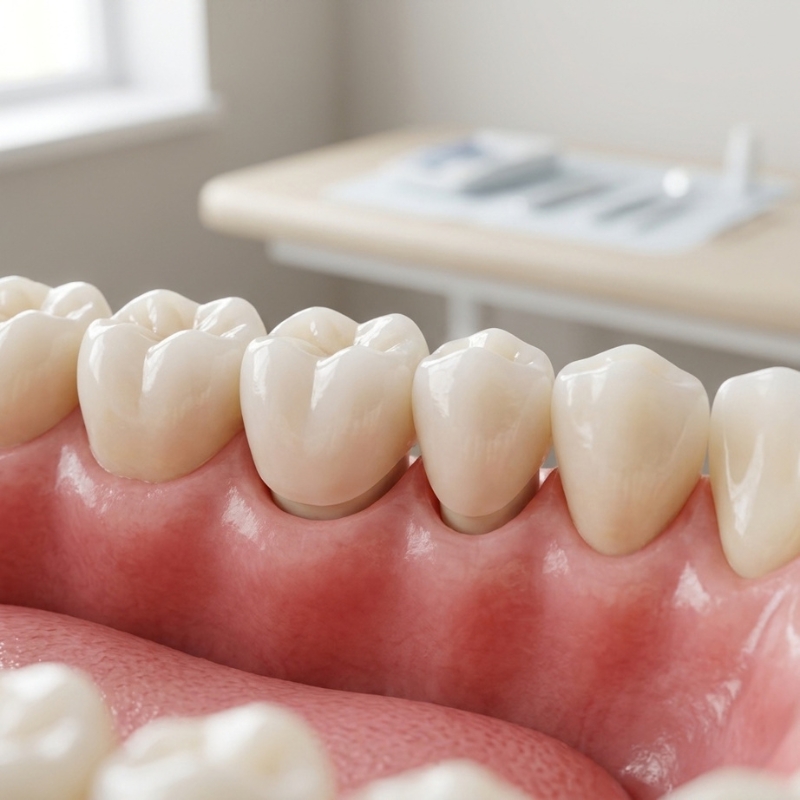
An implant supported bridge gives you back a row of teeth that look and work like your own, and keeping it in good condition is more straightforward than many people expect, once you know how to clean an implant supported bridge properly. The one thing that trips people up is that you cannot simply treat it like natural teeth, because the most important area to clean is the one you cannot see: the small gap underneath the bridge where it meets the gum. Get that part right and a bridge can serve you well for many years. This guide covers the daily routine, the tools that make it easy, what goes wrong if the area is neglected, and the signs worth watching for, so looking after yours becomes second nature.
Why Cleaning a Bridge Is Different
With natural teeth, floss slides down between each tooth to the gum. A bridge is different because the replacement teeth are joined together and sit as one connected unit, supported by implants with a small space running underneath where the bridge spans the gum. You cannot floss down between the joined teeth in the usual way, so that underneath area needs a different approach to keep it clean.
This matters because that hidden space is exactly where food debris and plaque like to gather, and it is the area most likely to cause problems if it is missed. The implants holding the bridge rely on healthy gum and bone around them, just as described on our implant supported dental bridge page, and keeping the area beneath the bridge clean is what protects that support. The good news is that once you have the right technique and tools, cleaning underneath becomes quick and easy. It is simply a different habit from the one you grew up with, not a harder one.
Daily Cleaning Routine
A good daily routine for a bridge has two parts: cleaning the surfaces you can see, and cleaning the space you cannot. Brush twice a day as you normally would, covering the outer, inner and biting surfaces of the bridge along with the rest of your teeth. That keeps the visible parts clean and your gums healthy around them.
The part that makes the real difference is cleaning underneath the bridge once a day. This is done by threading or passing a cleaning aid through the gap beneath the bridge and drawing it along to sweep away the plaque and debris sitting against the gum. It takes only a minute or two once you are used to it. The aim is to clear that whole span underneath so nothing is left to build up overnight. Doing this consistently, every day rather than now and then, is the single most valuable habit for the long-term health of the bridge and the implants holding it. If you are ever unsure your technique is reaching everywhere it should, your dentist or hygienist can watch you do it and fine-tune it.
Tools That Help
You do not need a drawer full of gadgets, but a few simple tools make cleaning a bridge far easier than a normal toothbrush alone:
- A floss threader or specially designed bridge floss, which lets you pass floss into the space underneath the bridge
- Interdental brushes, small bristled brushes that fit into gaps and under the bridge to sweep the area clean
- A water flosser, which directs a stream of water under and around the bridge to flush out debris
- A soft-bristled toothbrush for the visible surfaces, or an electric brush if you prefer
- Your dentist may also suggest a particular rinse or product suited to your situation
Most people settle on a combination that suits them, often an interdental brush or water flosser for under the bridge plus their normal brushing. It is worth asking your dentist which tools best fit the design of your particular bridge, since the right size of interdental brush and the best approach can vary from one bridge to the next. The best tool is simply the one you will actually use every day.
What Happens If Plaque Builds Up Underneath
It helps to understand what you are preventing, because it makes the daily minute underneath the bridge feel well worth it. When plaque is left to accumulate in that hidden space, it sits against the gum and the bases of the implants and causes the gum to become inflamed. You may notice redness, puffiness or bleeding when you clean.
If that inflammation is allowed to continue, it can progress to affect the deeper tissues and the bone that support the implants, in a process similar to gum disease around natural teeth. Loss of that supporting bone is one of the main threats to the long-term stability of any implant, and because the trouble starts in a spot you cannot easily see, it can develop quietly if the area is not being cleaned. This is not meant to alarm you; it is simply why that one daily habit matters so much. Keeping the area clean keeps the gum and bone healthy, and healthy gum and bone are what hold the bridge firmly in place for the long run.
Professional Maintenance Appointments
Home cleaning does the day-to-day work, but regular professional appointments are what keep it all on track. At these visits, your dentist or hygienist can clean areas that are hard to reach at home, check the health of the gums and the implants supporting the bridge, and make sure the bridge itself remains secure and in good order.
These appointments are also when small issues get picked up before they become big ones. A touch of inflammation, a spot that is being missed in your routine or any early change can be spotted and addressed while it is still minor. Your dentist will advise how often you should come in based on your own needs, as the right interval varies from person to person. Think of these visits as working in partnership with your daily routine: you handle the everyday cleaning, and the professional visits catch what everyday cleaning cannot, keeping the whole thing sound.
Signs Your Bridge Needs Attention
Between appointments, it pays to notice changes and act on them rather than waiting. Contact your dentist if you notice any of the following:
- Gums around the bridge that are red, swollen, tender or bleed when you clean
- Persistent bad breath or a lingering bad taste that cleaning does not clear
- Any looseness or movement in the bridge
- Discomfort when biting or chewing on the bridge
- A change in how the bite feels, or food packing underneath more than usual
- Visible gaps opening up or the gum receding around the supports
None of these mean the worst has happened, and most are straightforward to sort out when they are caught early. The key is simply not to ignore them. A quick visit when something feels different is always easier than leaving it, and your dental team would far rather see you sooner.
How Long Good Maintenance Adds to a Bridge’s Life
It is fair to ask what all this care actually buys you, and the honest answer is: a great deal. A well-maintained implant-supported bridge can last many years, and consistent cleaning and regular professional care are the biggest influences on how long yours serves you well. The daily minute underneath the bridge and the regular check-ups are not busywork; they are precisely what protects the gum and bone the bridge depends on.
Neglect works the other way, letting problems develop underneath where they are hardest to catch. So the effort genuinely pays off over the years. If you would like your cleaning routine tailored to your particular bridge, our principal dentist Dr Nick Hii can talk you through exactly what suits it. And if you are still considering a bridge and want to understand the upkeep before you commit, the best next step is to book an implant consultation and have it all explained for your situation.