| ANSWER-FIRST BLOCK (publish directly under the H1, above the first H2)
Early warning signs a dental implant may be failing include persistent pain, swelling or redness around the implant, a loose or shifting implant, gum recession exposing the metal, or difficulty chewing. If you notice any of these, book an assessment promptly, because early problems are often manageable. Learn about dental implant treatment in Melbourne. |
Dental implants have a strong track record, and the large majority go on serving patients well for many years with routine care and regular check-ups. So if something about yours feels different, the first thing to say is that noticing it early is genuinely useful rather than a cause for panic.
Problems around an implant tend to develop gradually and give warning signs long before anything serious happens. The patients who come through it most smoothly are the ones who recognise those signs and get assessed rather than waiting to see whether it settles. This guide, from the team at High Dental Implants Melbourne in Elsternwick, sets out what to watch for, what tends to cause it, and what to do next. It is not a substitute for having someone look at the implant.
How long should a dental implant last?
The implant post and the visible crown have different lifespans, which is a distinction worth understanding before you assess your own situation.
The titanium post is designed to bond with the jawbone in a process called osseointegration, and once that bond is established it can remain stable for a very long time. Studies of implant dentistry consistently report high long-term success rates, though no clinician can promise an individual outcome, because it depends on gum health, bone condition, general health, habits such as smoking, and how well the implant is maintained.
The crown on top is subject to everyday wear from chewing, much like a crown on a natural tooth, and may need replacing or repairing during the life of the implant. A crown that chips or loosens is not the same thing as the implant failing, which is one reason a proper assessment matters rather than assuming the worst.
Failure is also usually described in two categories. Early failure happens in the first months, when the implant does not bond with the bone as expected. Late failure occurs years afterwards, generally through disease in the tissue around the implant or through bone loss. The warning signs below apply mostly to the second group, which is the more common of the two.
The warning signs to watch for
Five signs are worth acting on. None of them individually confirms failure, but each one warrants a look.
Persistent or returning pain. Discomfort in the first days after placement is expected. Pain that arrives months or years later, or discomfort that had settled and has come back, is not part of normal healing and should be assessed.
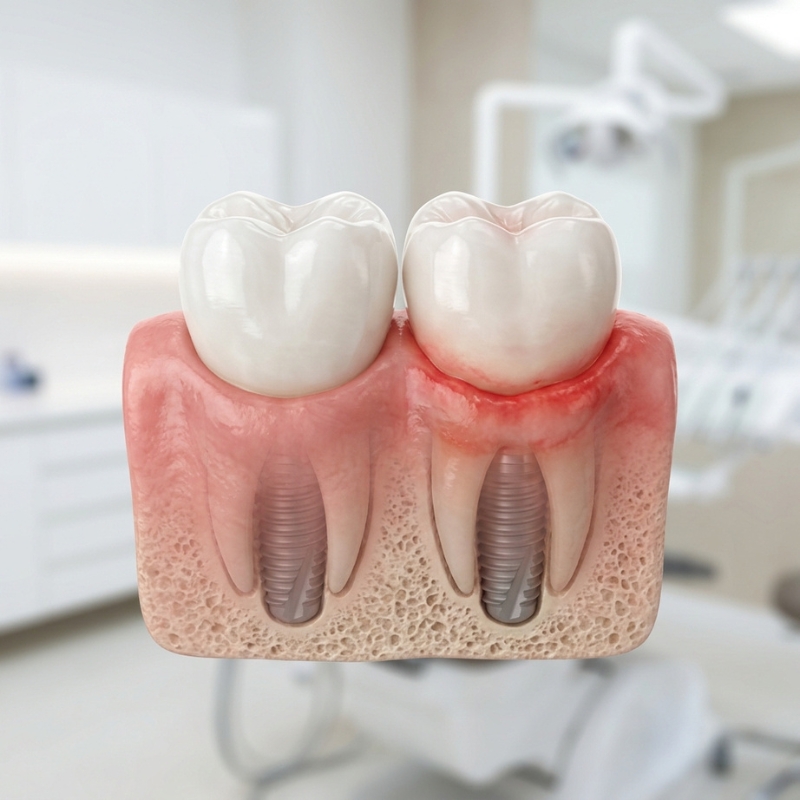
Swelling, redness or bleeding gums around the implant. Healthy gum tissue around an implant looks much like healthy gum elsewhere. Tissue that is puffy, red, tender or bleeds when you brush suggests inflammation, which is the earliest and most treatable stage of trouble.
Movement. A properly integrated implant should not move at all. Any wobble, rocking or shifting when you press on it needs prompt attention. It is worth noting that a loose crown or abutment can also feel like movement, and those are simpler problems, so movement is a reason to be seen rather than a reason to assume the worst.
Gum recession exposing metal. If the gum line pulls back far enough that you can see the metal collar of the implant or the abutment, the supporting tissue and bone underneath may be reducing.
Difficulty chewing or a changed bite. If the implant feels different under pressure, or your teeth no longer meet the way they used to, something has changed mechanically and is worth checking.
What causes implants to fail?
Understanding the common causes helps explain why prompt assessment tends to work in your favour.
Infection and gum disease around the implant is the most frequent factor. Bacteria in plaque can inflame the tissue around an implant and, if that inflammation is left to progress, it can begin to affect the bone supporting it. Caught at the inflammation stage, it is usually manageable.
Loss of supporting bone is the second. Bone can be lost through that same disease process or where the implant had limited bone around it to begin with. Where bone volume is part of the problem, bone grafting may form part of rebuilding a site, either to support the existing implant area or to prepare it for a replacement.
Smoking is a well-recognised risk factor, because it affects blood supply and healing in the gums and bone. Excessive bite load is the fourth, where grinding, clenching or a bite that concentrates force on one implant places more stress on it than it was planned to take. Uncontrolled general health conditions that impair healing can also play a part, which is why your medical history is reviewed at every stage.
What to do if you are worried
Book an assessment rather than waiting it out, and avoid trying to diagnose the problem yourself. The distinction between a loose crown, gum inflammation and genuine implant mobility cannot be made reliably from the outside, and each is treated differently.
An assessment typically involves an examination of the implant, the crown and the surrounding gum tissue, gentle measurement of the tissue around the implant, a check of how the implant behaves under pressure, and imaging to look at the bone level. That combination shows whether the issue is superficial, whether inflammation has started to affect bone, and how far it has gone.
In the meantime, keep cleaning the area carefully rather than avoiding it, since plaque build-up makes inflammation worse. If you have swelling that is increasing, a bad taste, discharge or fever, treat that as urgent and contact a dental practice the same day.
Bring what you know with you. When the implant was placed, who placed it, any records or radiographs you have, and how long the symptom has been present all help build an accurate picture quickly. If the implant was placed at another practice, that is not a barrier to being assessed here.
Frequently Asked Questions
Can a failing dental implant be saved?
Often, yes, particularly when the problem is caught while it is still limited to the gum tissue around the implant. Treatment may involve professional cleaning of the site, managing infection and addressing the underlying cause. Outcomes depend on how much supporting bone remains, which imaging will show.
Is it normal for an implant to feel loose?
No. A properly integrated implant should feel completely solid. That said, what feels loose is sometimes the crown or the abutment rather than the implant itself, and those are more straightforward to address. Any sensation of movement should be assessed promptly rather than monitored at home.
How do I know if my implant is infected?
Common indicators include red, swollen or tender gums around the implant, bleeding when brushing, a persistent bad taste or odour, discharge, and discomfort that does not settle. Increasing swelling or fever should be treated as urgent. A dental assessment confirms whether infection is present and how far it extends.
What happens if an implant has to be removed?
If an implant cannot be retained, it can usually be removed and the site allowed to heal. Depending on the bone remaining, grafting may be used to rebuild the area before a replacement implant is considered. Your dentist will explain the sequence and timing that applies to your case.
Acting early is what makes the difference
Nearly everything that goes wrong around an implant announces itself first as inflammation, and inflammation is the stage at which there are the most options. Pain, swelling, movement, receding gums and a changed bite are all worth a phone call rather than a wait-and-see approach.
If any of this sounds like what you are experiencing, whether the implant was placed with us or elsewhere, have it looked at. You can book an implant consultation at our Elsternwick clinic, or book an implant assessment at High Dental Implants Melbourne.