
Losing a tooth can feel like a purely cosmetic issue at first, yet that small gap can set off a chain of changes that affect how you chew, speak and even how your jawbone ages. Whether the loss happened last week or years ago, understanding the broader impact helps you decide if it is time to act. In this guide, we unpack the science and the everyday lived experience behind tooth loss, then look at realistic ways replacement restores function, comfort and self-assurance. If you are curious about a modern, fixed solution, you can also explore single tooth implant treatment in Melbourne after reading.
1. Oral Health: Why a Single Gap Can Trigger Bigger Problems
A missing tooth is more than an empty space. Over months and years it can lead to changes that make future dental work more complicated.
1.1 Jawbone Stimulation and Bone Loss
The root of a natural tooth constantly stimulates the surrounding jawbone when you chew. Without that pressure, the underlying bone can gradually shrink (a process called resorption). Less bone means:
• Weaker support for neighbouring teeth, which may start to loosen.
• A collapsed facial profile that can make the cheeks appear sunken.
• Limited foundation for future implants, sometimes requiring bone grafting.
1.2 Shifting and Over-Erupting Teeth
Teeth rely on each other for position. When one is gone, nearby teeth tilt into the gap while the opposing tooth may over-erupt. That movement can create:
• New hard-to-clean angles where plaque collects.
• Premature wear on remaining teeth due to altered bite forces.
• Jaw joint strain leading to clicking or discomfort.
1.3 Gum and Bite Health
Food and bacteria gather more easily in a gap, increasing the risk of gum inflammation or decay on neighbouring tooth surfaces. An imbalanced bite can also strain periodontal ligaments, which support each tooth.
Bottom line: replacing a lost tooth is a protective move, not just a cosmetic upgrade.
2. Everyday Comfort: Eating, Speaking and Beyond
Many Melbourne patients adapt their habits without realising how much the gap is costing them in daily comfort.
2.1 Chewing Efficiency
Molars grind, premolars tear and incisors bite. Remove one piece of that system and you often unconsciously favour the other side. Over time this can:
• Slow mealtimes as you re-chew softer sections.
• Cause digestive upsets because food reaches the stomach less broken down.
• Lead to muscle fatigue or headaches on the over-worked side.
2.2 Sensitivity and Soreness
Exposed gum tissue can rub against crusty bread, seeds or hot drinks. Some people report temperature sensitivity in the adjacent teeth because they suddenly take on a greater workload.
2.3 Speech Clarity
Front-tooth gaps can alter tongue placement for ‘s’, ‘th’, ‘f’ and ‘v’ sounds. While you may compensate over time, a fixed replacement often restores natural pronunciation instantly.
3. Psychological Benefits: The Confidence Ripple Effect
Self-esteem and social comfort are intangible but powerful motivators for seeking tooth replacement. Research published by Healthdirect Australia notes that appearance concerns and anxiety about loose dentures are common reasons adults seek implants or bridges.
3.1 Smiling and Social Interaction
A complete smile invites eye contact and organic conversation. Patients often report:
• Willingness to laugh freely without covering their mouth.
• More relaxed body language in photographs or meetings.
• Reduced social avoidance, especially around eating in public.
3.2 Workplace and Professional Presence
Confident verbal communication matters in service, teaching, sales and leadership roles. Clear speech and an unrehearsed smile help you project capability and friendliness.
3.3 Overall Wellbeing
Feeling secure about your teeth can improve mood and reduce everyday stress. Some patients even return to crunchy or nutritious foods they once avoided, supporting broader health goals.
4. Comparing Popular Replacement Options
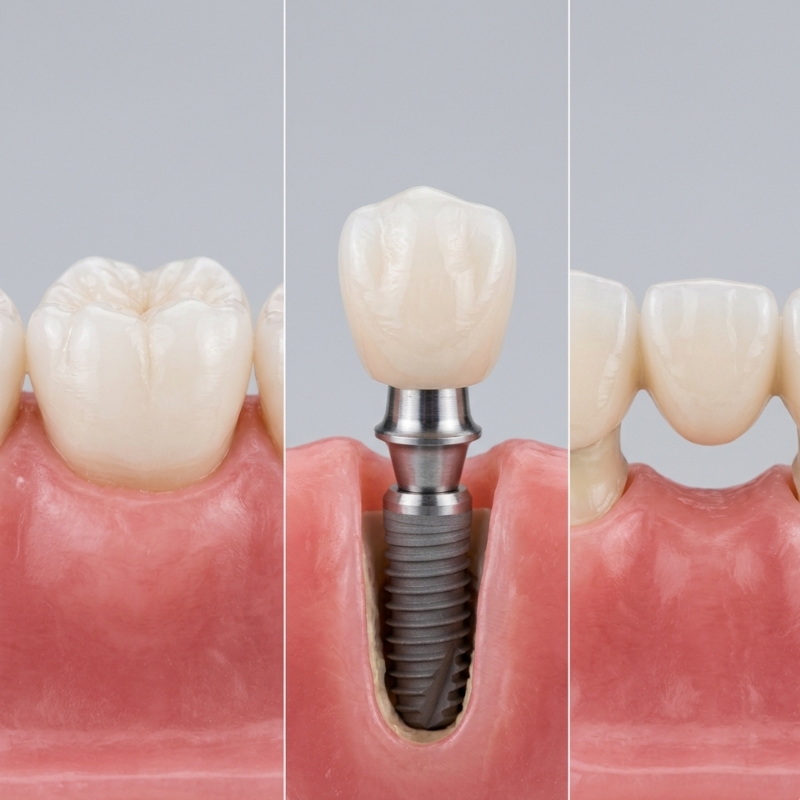
Each solution—implant, bridge, or removable partial denture—impacts oral health, comfort and confidence differently. The table below highlights high-level differences to help start the conversation with your dentist.
|
Replacement Option |
How It Protects Oral Health | Comfort Factors |
Confidence and Aesthetics |
| Single dental implant | Replaces root, stimulates bone, leaves neighbouring teeth untouched | Fixed, feels like a natural tooth, no food traps under a plate | Custom crown blends with nearby teeth, no slipping or clicking |
| Fixed dental bridge | Fills gap and prevents drift, but relies on crowns over neighbouring teeth | Feels solid once cemented, daily flossing with a threader is required | Good aesthetics, though gum changes can create small gaps over time |
| Removable partial denture | Prevents some tooth movement, does not stop bone loss in gap | Can feel bulky, must be taken out for cleaning, possible initial lisp | An affordable way to fill a smile quickly, but clasps may show on some teeth |
A dentist will help you weigh additional factors such as bone volume, oral hygiene habits and budget, yet the table shows why a long-term fixed solution tends to rate highest for both function and self-confidence.
5. Timing Matters: Early Replacement vs Waiting
It is tempting to postpone action when there is no immediate pain, yet later treatment can become more complex.
5.1 Bone Preservation Window
Bone loss accelerates in the first 12–18 months after extraction. Acting within this period often removes the need for grafting.
5.2 Bite Stability
The longer neighbouring teeth lean into the space, the more orthodontic correction may be needed to realign them for a bridge or implant crown.
5.3 Habit Formation
Compensatory chewing patterns and speech adaptations become ingrained, making the rehabilitation period feel longer when you finally replace the tooth.
For more detail on the risks of delaying treatment, see the clinic’s related resource on what happens if you don’t replace a missing tooth.
6. Mistakes to Avoid When Choosing a Replacement
- Focusing only on appearance
A white crown that does not balance your bite can invite fractures or jaw strain. - Ignoring gum health first
Active gum disease can jeopardise any restoration. A cleaning phase often precedes replacement. - Assuming “everyone” is suited to the same solution
Bone density, medical history and even work schedule influence your best option. - Shopping purely on price
Lower-cost materials or rushing steps like digital planning can increase the risk of future repairs. - Overlooking maintenance commitments
Bridges and implants both need tailored home care. Discuss what fits realistically into your routine.
7. Questions That Help You Understand the Repair Approach
- What imaging will you use to map my bone and nerves?
• How will this option impact the health of nearby teeth and gums in five years?
• If bone grafting is needed, what material and healing timeline should I expect?
• What daily cleaning tools will keep the area healthy?
• How many review appointments are included in the quoted plan?
Asking these questions steers the conversation toward long-term success, not just quick aesthetics
8. Life After Replacement: What Patients in Melbourne Report
Local patients often describe a few welcome surprises:
- Food variety returns: from sourdough crusts to steak, most find eating easier within weeks of a fixed crown settlement.
• Speech confidence: radio presenters and teachers particularly note clear enunciation without denture movement.
• Simpler hygiene: once brushing and flossing routines adapt, maintenance often feels easier than caring for a removable plate.
• Psychological lift: several patients share stories of finally booking family photos or applying for public-facing jobs they had avoided.
9. FAQs
1. Will replacing one tooth really stop other teeth from moving?
Filling the gap adds physical support and balances bite forces, which slows or prevents drifting. Minor movement still occurs as part of natural wear, yet it is far less dramatic than leaving a space untreated.
2. Is an implant always better than a bridge?
Not necessarily. Implants protect bone and neighbouring teeth, but a well-designed bridge can serve patients with limited bone or certain medical conditions. A comprehensive assessment decides the safest path.
3. How long will it take to feel “normal” when chewing?
Most patients adapt within a few meals for bridges or partial dentures, and within a couple of weeks once an implant crown fully integrates. Individual healing and habit change vary.
4. Can I exercise after tooth replacement surgery?
Light walking is usually fine after the first 24–48 hours, yet dentists often recommend avoiding heavy lifting or high-intensity workouts for roughly a week to protect early clot formation.
5. What happens if I wait a few years before acting?
Expect increased bone resorption, potential gum shrinkage and drifting teeth. Treatment can still work later, but may involve bone grafting, orthodontics or larger restorations.
Final Thoughts
Replacing a missing tooth safeguards more than your smile. It helps maintain strong jawbone, balanced chewing, clear speech and the intangible confidence that comes from knowing your teeth are working with you, not against you. When timing, lifestyle and oral health line up, taking action sooner usually means a simpler procedure and a quicker return to your favourite foods and activities. If the gap keeps catching your attention or affecting daily comfort, consider booking an assessment to explore which replacement fits your long-term goals best.